Hyundai IONIQ 5 Safety Features Explained: SmartSense, HDA II and Battery Protectio

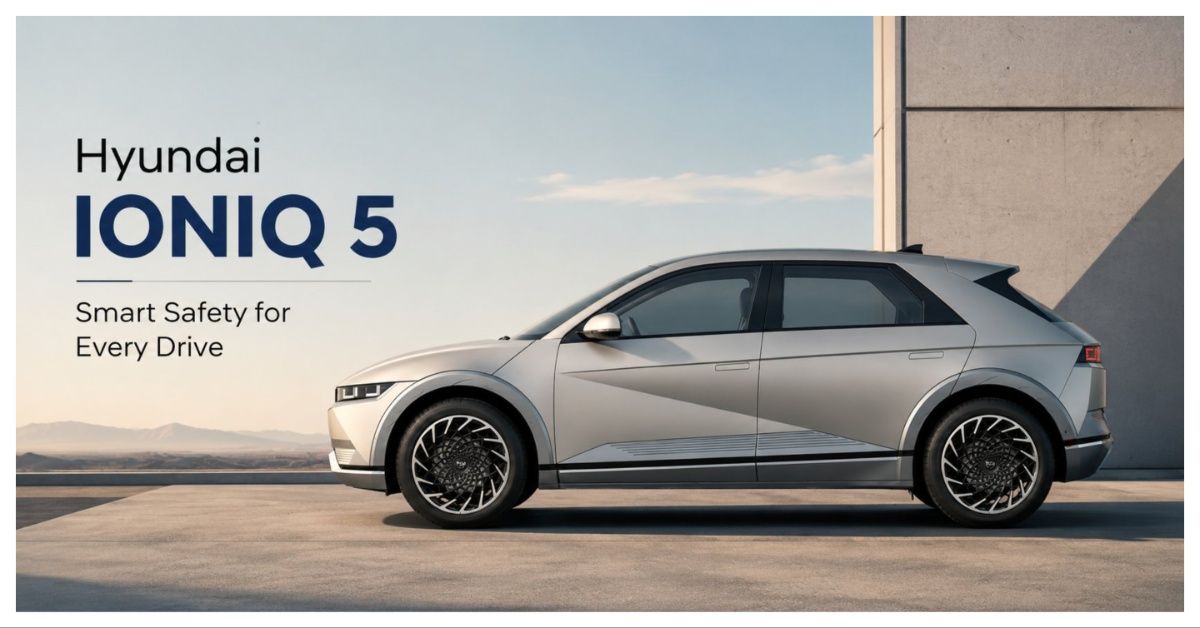
Dubai: The Hyundai IONIQ 5 pairs active safety technology with real structural protection, not just one or the other. Hyundai SmartSense handles the driver-assistance side, while Highway Driving Assist II and the car's crash structure look after what happens if something still goes wrong.
KEY TAKEAWAYS
What safety features does the Hyundai IONIQ 5 have?
The IONIQ 5 gets Hyundai SmartSense features such as FCA, LKA, LFA, BCA, RCCA, LVDA, DAW and HDA II.How does the IONIQ 5 protect its battery in a crash?
Its high-voltage battery is shielded by an ultra-high-strength steel support structure, while the multi-frame body helps absorb and distribute crash forces.Here's how the IONIQ 5 works to prevent a crash in the first place and to protect everyone inside if it can't be avoided.
Hyundai SmartSense Brings Advanced Safety to the IONIQ 5
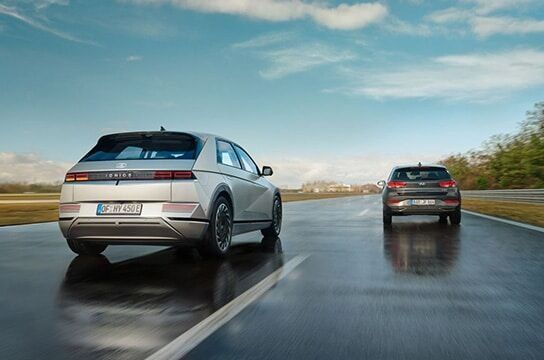
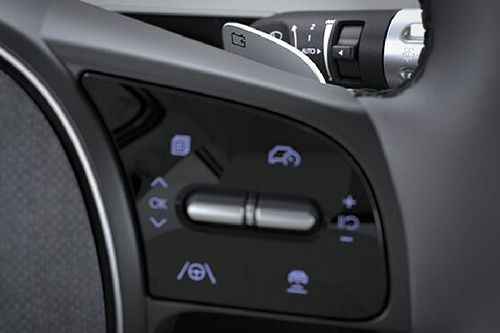
SmartSense is Hyundai's suite of advanced safety and driver-assistance systems, and the brochure notes something worth pointing out: the IONIQ 5 is the first Hyundai model to get Level 2 autonomous safety technology through HDA II. Beyond that headline feature, several everyday systems are working quietly in the background.
|
Feature |
What it does |
|
Forward Collision-Avoidance Assist (FCA) |
Detects slowing or stopped vehicles, cyclists, and pedestrians, and brakes automatically if needed |
|
Lane Keeping Assist (LKA) |
Warns you visually and audibly if you drift out of your lane, then applies gentle corrective steering |
|
Lane Following Assist (LFA) |
Keeps the car centred in its lane between 0 and 185 km/h |
|
Blind Spot Collision-Avoidance Assist (BCA) |
Detects a vehicle in your blind spot and can apply braking and steering assistance |
|
Rear Cross-Traffic Collision-Avoidance Assist (RCCA) |
Warns you of approaching traffic while reversing and can brake automatically |
|
Leading Vehicle Departure Alert (LVDA) |
Lets you know when the car ahead moves off from a stop |
|
Driver Attention Warning (DAW) |
Picks up on fatigue or distraction and suggests you take a break |
HDA II Makes Highway Driving Less Demanding
Highway Driving Assist II is worth its own section, since it's one of the strongest safety stories in the IONIQ 5. In simple terms, it takes some of the routine mental load off the driver during a long highway stretch, without taking over the drive entirely.
- Manages speed and following distance automatically
- Helps centre the car in its lane
- Assists with lane changes
- Adds collision-avoidance help if another car cuts in close
For long drives out of Dubai or Abu Dhabi, that combination genuinely reduces fatigue rather than just ticking a feature box.
A Structure Designed to Protect Occupants and the Battery
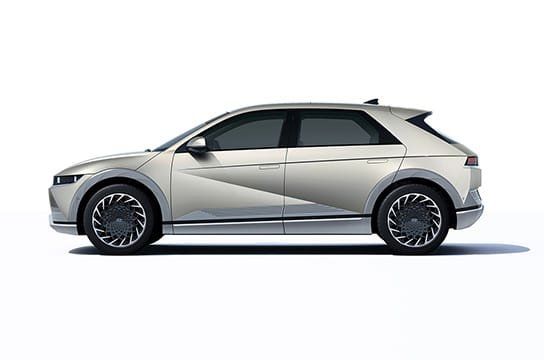
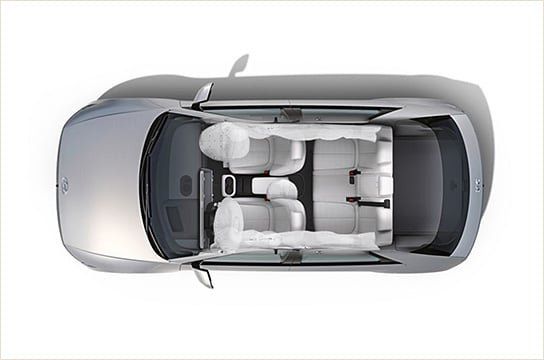
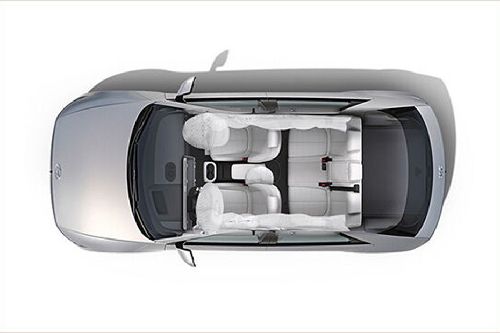
Hyundai IONIQ 5 Is One of the Smartest EVs to buy in the UAE, but its safety story goes well beyond the sensors watching the road. The car's multi-frame structure is built to absorb and redirect crash energy, keeping both the cabin and the 800V battery protected.
- A collision energy absorption zone spreads the crash force along set energy load paths
- Crash structures are designed to deform in a predictable way, protecting occupants
- A load support zone at the front of the dashboard adds an evasion structure to reduce impact
- The high-voltage battery sits within the floor, shielded by an ultra-high-strength steel support structure
It's the kind of engineering you never notice on a normal drive, but it's exactly what matters in the moment it's needed.
Smart Braking Adds Another Layer of Assistance
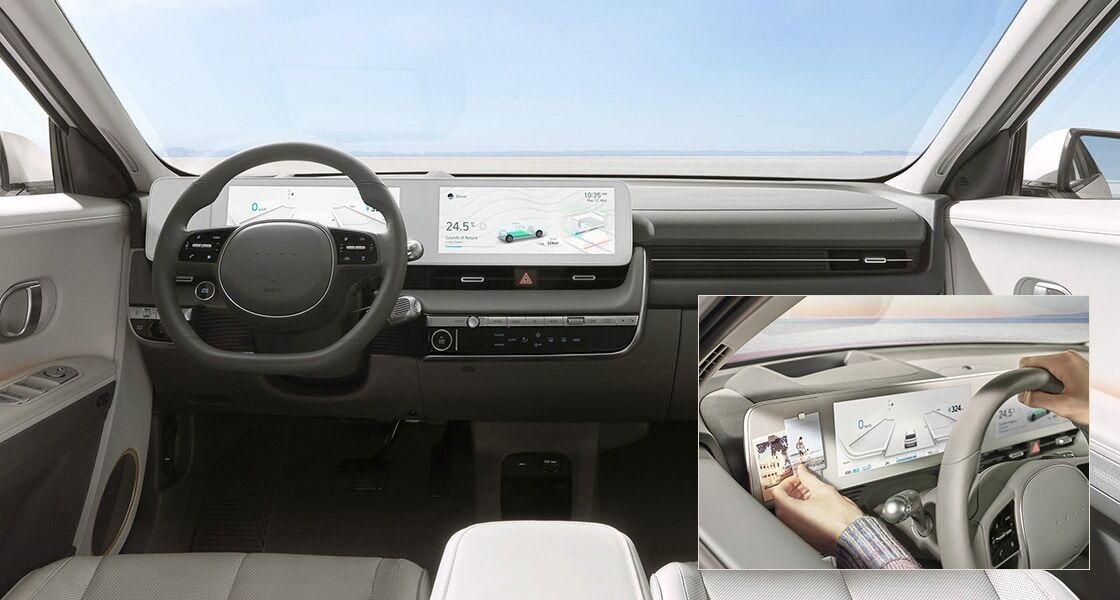
Regenerative braking on the IONIQ 5 does more than just top up the battery. You can adjust the regeneration level through the steering wheel paddles, hold the left paddle for maximum braking, or switch to one-pedal driving altogether. The Smart Regenerative Braking System goes a step further, using front radar sensors to automatically adjust braking strength based on the traffic ahead, so the car reacts even if you don't.
|
Feature |
What it does |
|
Regenerative Braking Levels |
• Driver can adjust the level of energy regeneration using steering-wheel paddle shifters |
|
Maximum Regeneration |
• Holding the left paddle activates maximum regenerative braking |
|
One-Pedal Driving |
• Allows acceleration, deceleration and stopping using only the accelerator pedal |
|
Smart Regenerative Braking |
• Uses front radar sensors to automatically adjust regenerative braking according to traffic ahead |
|
Traffic-Based Braking |
• Automatically increases or reduces regeneration to slow the vehicle according to traffic conditions |
|
Battery Energy Recovery |
• Uses the electric motor to slow the vehicle and recover energy for the battery |
|
Paddle Shifters |
• Steering-wheel paddles allow the driver to control regenerative braking levels while driving |
Safety Features That Make the IONIQ 5 More Reassuring
Put together, SmartSense, HDA II, FCA, LFA, LKA, BCA, RCCA, LVDA, and DAW handle crash prevention, while the multi-frame structure, battery protection, and smart regenerative braking take care of what happens during and after impact. For UAE buyers doing daily runs through city traffic and long highway drives alike, that's a complete safety package rather than a single standout feature. If you're comparing your options, our IONIQ 5 vs Tesla Model Y breakdown is worth reading next.
Also Read: Volvo ES90 Has Serious Competition: 4 EVs Worth a Look in the UAE
-
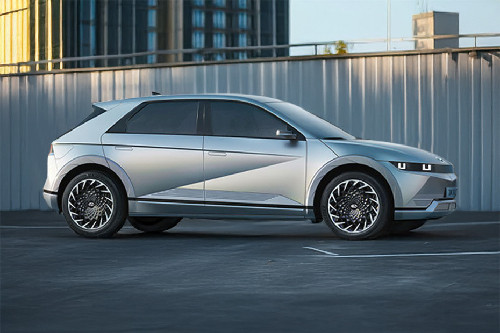
Explore Hyundai IONIQ 5
-

-
Hyundai Creta -
Hyundai Tucson -
Hyundai Grand i10 -
Hyundai Accent -
Hyundai Santa Fe -
Hyundai Elantra -
Hyundai Palisade -
Hyundai Sonata -
Hyundai Azera -
Hyundai Kona -
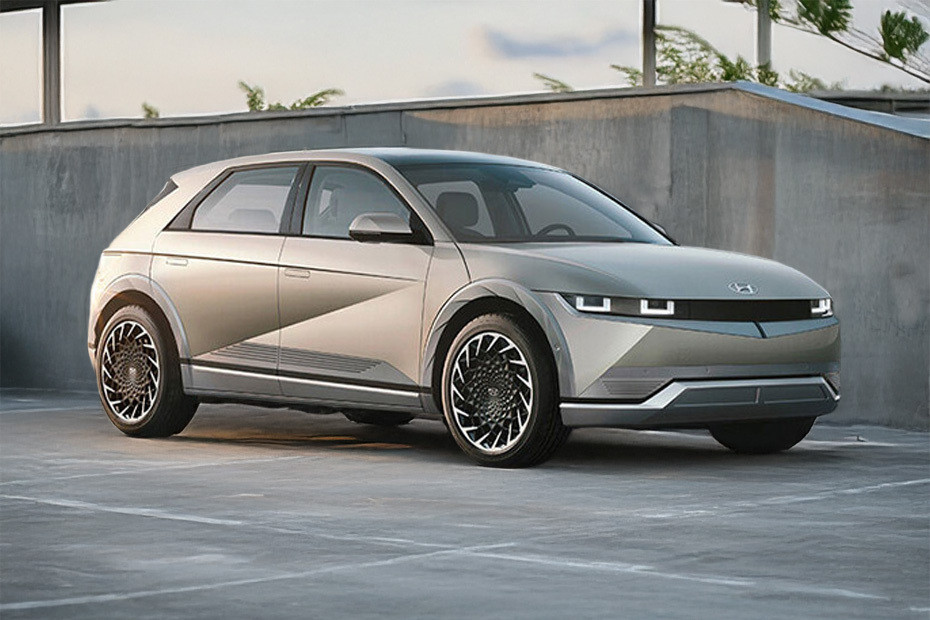
Hyundai IONIQ 5 -
Hyundai Creta Grand
-
Three Battery Types, Three Trade-offs: Which Battery Type Would Suit You?

-
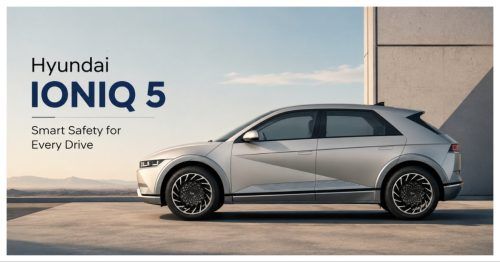
Hyundai IONIQ 5 Safety Features Explained: SmartSense, HDA II and Battery Protectio
-
Hyundai IONIQ 5 UAE 2026: Full Overview of Design, Performance, Safety and Everything That Matters
-
Hyundai IONIQ 5 Colours: Every UAE Shade Ranked From Subtle to Bold
-
IONIQ 5 or Tesla Model Y? The EV Comparison Every UAE Buyer Needs
- Latest
- Popular



- News
- Featured Stories
- Latest
- Upcoming
- Popular
-
 Alert Me When Launched
 -
 Alert Me When Launched
 -
 Alert Me When Launched
 -
 Alert Me When Launched
 -
 Alert Me When Launched
 -
 Alert Me When Launched
-
 Ramadan adventure begins with a new chapter with IONIQ 507 Oct, 2025 .
|
|
Transmission
Automatic
|
|
Power
231Hp
|
|
Torque
605Nm
|
|
|
- Latest
- Upcoming
- Popular
-
-
-
-
-
 Fiat 500EPrice coming soon
 -
 Citroen C4Price coming soon
-
Alert Me When Launched
-
 Alert Me When Launched
 -
 Alert Me When Launched
 -
 Alert Me When Launched
 -
 Alert Me When Launched
 -
 Alert Me When Launched