Why Used Car Loans Usually Cost More Than New Car Loans

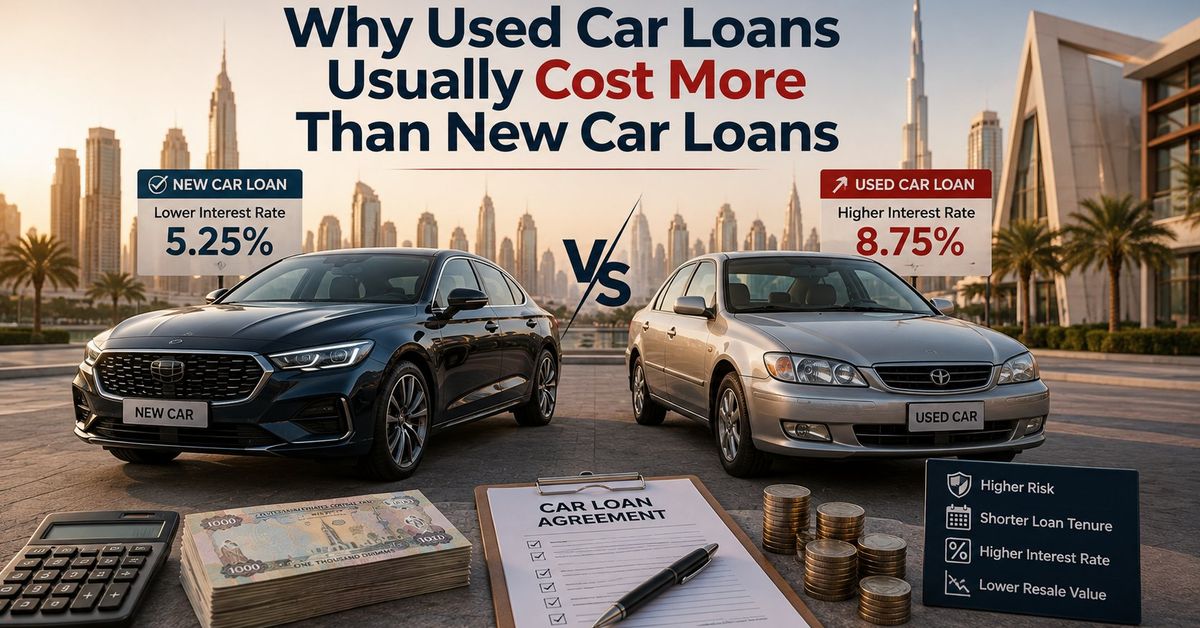
Abu Dhabi: It is generally a well-established practice for banks to charge more for used cars, as they lose value faster. That’s the whole story. We all know a new car depreciates steadily and consistently, whereas a used car that’s already three years old will lose another 30 to 40 percent of what’s left over the next five years.
KEY TAKEAWAYS
How much higher are used car loan rates in the UAE?
Typically, 0.5 to 1 percent higher on the flat rate compared with an equivalent new car loan.Do banks finance the same percentage of a used car's value?
No, loan-to-value usually drops to 60 to 80 percent, versus up to 100 percent for new cars.A brand-new car loses roughly 40 percent in that same span. The used car depreciates faster, so the bank charges more to protect itself: higher interest rates, often with a bigger down payment, and a shorter loan window.
And it is often observed that not all buyers consider this element until the financing quote arrives. To estimate your monthly installments beforehand, you can check out the UAE car finance calculator monthly payment guide to break down the real costs. The used car that looked affordable on the lot may not appear that way, and the monthly payment is higher than expected.
Knowing these nuances is vital to making the right decision, one that can save you money and make the purchase more financially manageable. Read on to know all the key details.
The Key Differences
Most finance firms or banks treat used cars as a fundamentally different kind of collateral than new ones, and that is visible across nearly every term of the loan. For a comprehensive overview of rates and bank offers, read about the best car loan EMI options in UAE before choosing a lender.
|
Detail |
New Car Loan |
Used Car Loan |
|
Typical flat rate |
2.5% to 4.5% p.a. |
3% to 7% p.a. |
|
Loan-to-value |
Up to 80% to 100% |
60% to 80% |
|
Down payment |
15% to 20% |
20% to 25% |
|
Repayment term |
Up to 60 months |
12 to 48 months, occasionally 60 for cars under 3 years |
|
Age limit at loan end |
Not usually a factor |
Most banks cap at 5 to 7 years old. |

Why Banks Charge More
The rationale behind every one of these differences comes back to the same thing: a used car is a riskier asset to lend against than a new one.
- A used car depreciates faster in percentage terms than a new one over the same period, so the collateral backing the loan loses value more quickly relative to what is still owed.
- Mechanical condition is harder to verify remotely. A new car comes with a manufacturing warranty and a known service history from day one, while a used car’s true condition depends on how well the previous owner actually maintained it.
- Used cars carry a higher chance of needing major repairs during the loan term, and a bank has no interest in financing a car that becomes unreliable or unsellable before the loan is paid off.
- Resale value on a used car, should the bank need to repossess and sell it, is inherently less predictable than reselling something that was new just months earlier.
Know The Real Cost
The real cost truly matters. Let’s say on an AED 80,000 used car financed at 6 percent flat instead of a comparable new car at 3.5 percent, the difference in total interest paid over a four-year term can be significant. Add a larger required down payment on top, and the used car buyer needs considerably more cash upfront just to get the same car on the road.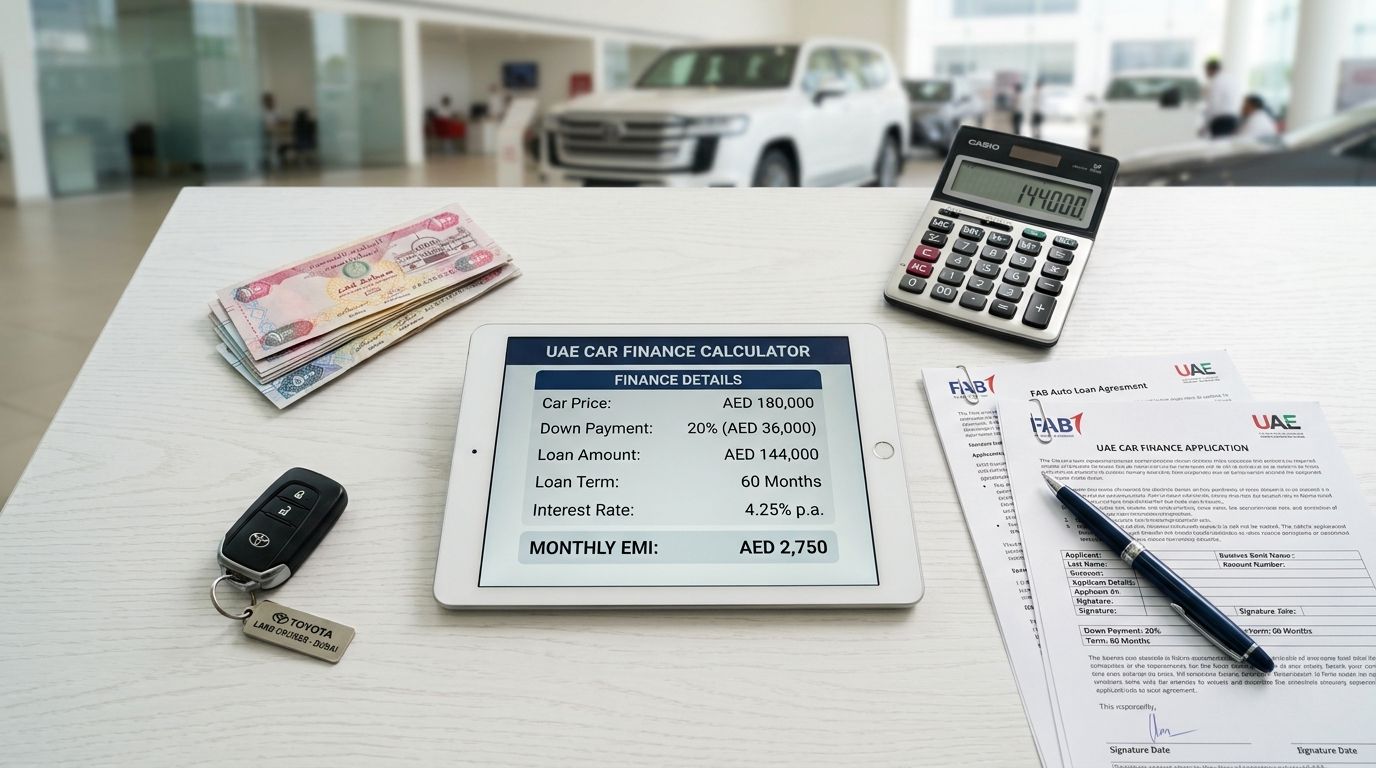
That said, a used car loan is still often the cheaper overall path to ownership, since the car itself typically costs far less than a comparable new one. The higher rate applies to a smaller loan amount, which is why used financing remains popular despite the less favourable terms on paper.
Things to Know
A few things do help narrow the gap between new and used financing costs.
- Choosing a used car under three years old often comes with better terms, as some banks extend repayment to 60 months and offer more competitive rates specifically for near-new stock.
- Buying from a platform or dealer that provides full service history and a proper inspection report can occasionally support a case for a slightly better rate, since it reduces the bank’s uncertainty about the car’s condition.
- Transferring salary to the lending bank works exactly the same way on a used car loan as it does on a new one, typically worth a percentage point or more off the quoted rate.
- Comparing Islamic Murabaha financing alongside conventional loans is worth doing here too, since profit rates on used car financing can occasionally undercut conventional rates depending on the bank.
If you are buying a used car expecting new-car financing terms, you often end up disappointed or, worse, commit to a deal before realising the actual monthly cost. Getting pre-approval for financing before buying, rather than after falling for a specific car, avoids that trap entirely and gives the buyer real negotiating room on both the car price and the loan terms.
The Final Word
So the higher used car loan is just a reality; it is just the way the financing works. While used car loans cost more in the UAE, you can still benefit if you take the time to understand the process and how it works.
Banks are here to protect themselves, and so the terms might look unfavourable. That doesn’t mean used car financing is a bad option; in fact, this makes used car financing a rather good option, since the smaller purchase price usually more than offsets the higher rate.
Given the competition and various offers available in the market, there is always a chance to land a win-win deal on your next used car, provided you approach it right.
Kiran Bajad

Kiran Bajad, a seasoned automotive journalist, writes with clarity and passion, helping readers make sense of a fast-changing car market. Drawing on years of road experience and a deep understanding of global trends, he turns complex industry shifts into practical guidance for everyday buyers.
Read Full Bio-
Mitsubishi Destinator -

Mitsubishi Attrage -
Mitsubishi Outlander -
Mitsubishi Pajero -
Mitsubishi ASX -
Mitsubishi Montero Sport -
Mitsubishi Xpander -
Mitsubishi Eclipse Cross -
Mitsubishi L200 -
Mitsubishi Mirage -
Mitsubishi Xpander Cross
- Latest
- Popular





- News
- Featured Stories

- Latest
- Upcoming
- Popular
-
 Mitsubishi PajeroPrice coming soon
 -
-
 Alert Me When Launched
 -
 Alert Me When Launched
 -
 Alert Me When Launched
-
-
-
-
Mitsubishi PajeroPrice coming soon
-
-
-
 Mitsubishi Attrage05 May, 2026 .
 -
 Mitsubishi Mirage05 May, 2026 .
 -
 Mitsubishi Outlander05 May, 2026 .
 -
 Styled for Adventure05 May, 2026 .
 -
 Mitsubishi Eclipse Cross05 May, 2026 .
 -
 Mitsubishi Montero Sport05 May, 2026 .
 -
 Made for Your Family’s Dream Destinations05 May, 2026 .
 -
 Mitsubishi Xpander Cross05 May, 2026 .
 -
 Mitsubishi L20005 May, 2026 .
 -
 All New Mitsubishi L200 Pickup Walkaround - AR03 Nov, 2025 .