What UAE Summer Heat Actually Damages on Your Car

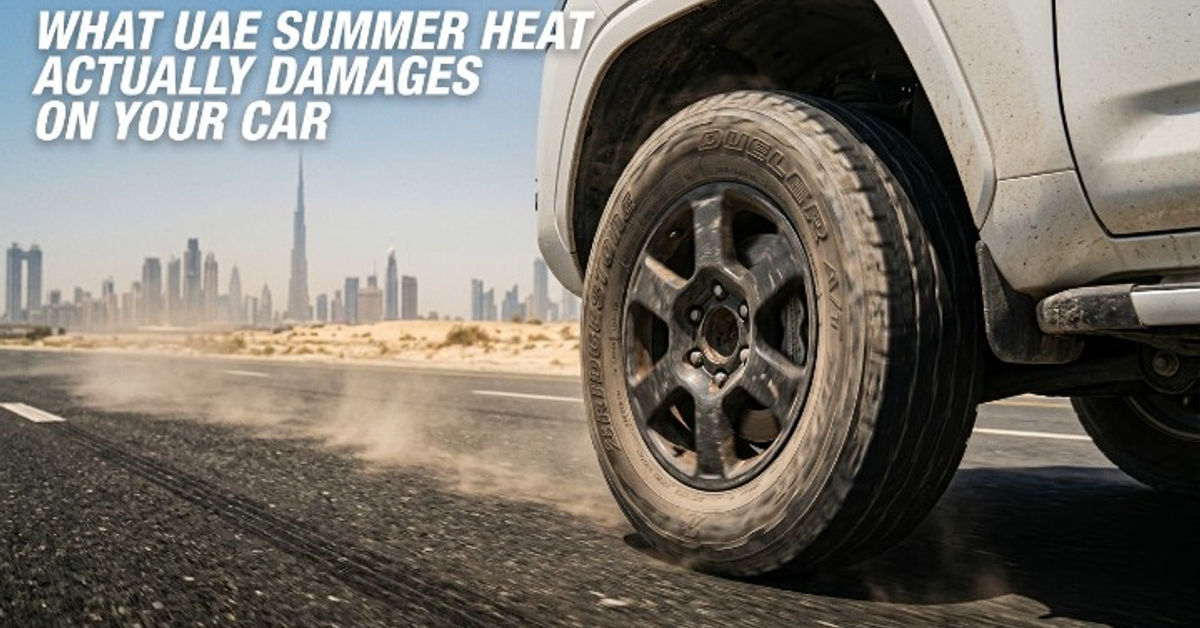
Abu Dhabi: It is a common fact that summers in the Middle East are brutal. This is just a pure geographical fact of this region, which actually does not have the friendliest weather for your car. The intense heat means common issues with cars, including batteries failing, tyres blowing, paint fading, and engines overheating; the entire vehicle is apparently under siege for four months a year.
KEY TAKEAWAYS
What fails most often in the UAE summer heat?
Batteries and tyres are the top insurance claims data, followed by AC systems under sustained strain.Does UAE heat actually damage engine fluids?
Not directly, as modern fluids are built for this heat, but the containers and seals around them age faster instead.Honestly, some of that is true, but not everything; some of it is just exaggerated by workshops that have every incentive to sell a summer service package. With temperatures regularly crossing 45 degrees and parked cabins reaching well past 60 degrees, the heat is properly doing something to every car in the country. Recent UAE guidance also confirms that summer puts additional strain on cooling systems, tyres, batteries, and air conditioning.
Under such ownership realities, you need to work out what simply ages a little faster and what most owners worry about for no real reason. We tell you all.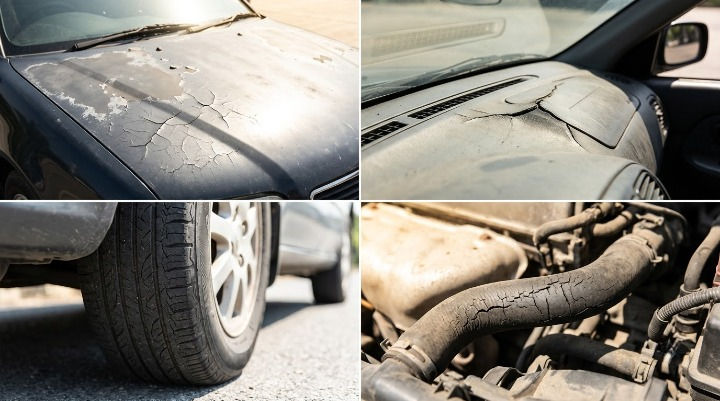
The Real Challenges
A handful of components take the worst of the UAE summer, and the pattern shows up consistently across workshop data and official summer driving advice.
- Batteries. Heat accelerates the chemical reactions inside a car battery and speeds up electrolyte evaporation and internal corrosion, which can shorten battery life in the UAE. A battery already around two to three years old going into summer deserves particular attention, as explored in our guide on battery health after two years in UAE heat as high temperatures can expose a battery that is already nearing the end of its useful life. Recent UAE fleet data reported 25 to 35 percent more battery-related service requests during the summer compared with cooler months.
- Tyres. Heat increases tyre pressure, and combined with scorching road surfaces, high speeds, incorrect inflation, overloading, and ageing rubber, this raises the risk of tyre failure. UAE RTA specifically advises drivers to maintain the correct tyre pressure and check tyres for cracks, wear, and structural damage during summer.
- Paint and clear coat. Prolonged direct sun exposure and UV radiation can accelerate fading and deterioration of the exterior finish. The damage is gradual rather than something that happens after one summer, but cars that spend years parked outside without protection will generally show more obvious fading and surface deterioration.
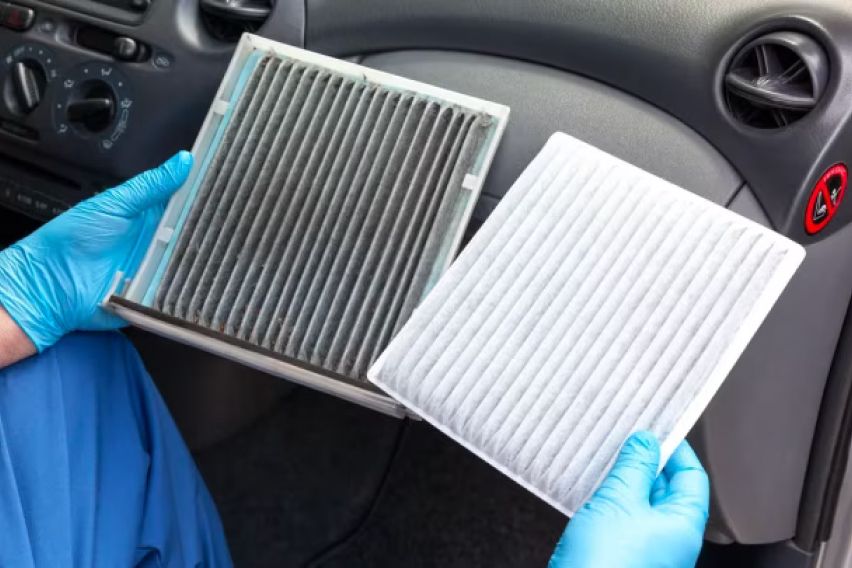
- AC systems. Air conditioning works harder and longer in the UAE than in most climates, and components under sustained strain can wear out faster, particularly on cars already several years old with original compressors, condensers, fans, and seals. UAE experts specifically identify AC failure and reduced cooling efficiency as common summer complaints.

The Real Damages
Most summer car-care advice often overlooks the real damage issues. Generally speaking, the engine oil, coolant, transmission fluid, and brake fluid inside a modern car are engineered to handle high operating temperatures, and under normal condition they are not automatically the weak point.
What actually fails first can be the ageing plastic reservoirs, rubber hoses, belts, and seals that contain or support those fluids. The fluids generally are not the problem; they are designed to cope with high temperatures. The components holding them are what can age faster in this climate, developing leaks even while the fluid inside is still doing exactly what it is supposed to do.
That distinction matters for how owners should actually spend their summer maintenance budget. A car with a well-maintained cooling system rarely overheats. A car with old, brittle hoses, a weak cooling fan, a partially blocked radiator, or a coolant leak is a different story, and the extreme ambient temperature can expose those weaknesses much faster. UAE RTA specifically advises checking coolant and oil and looking for water or oil leaks before driving.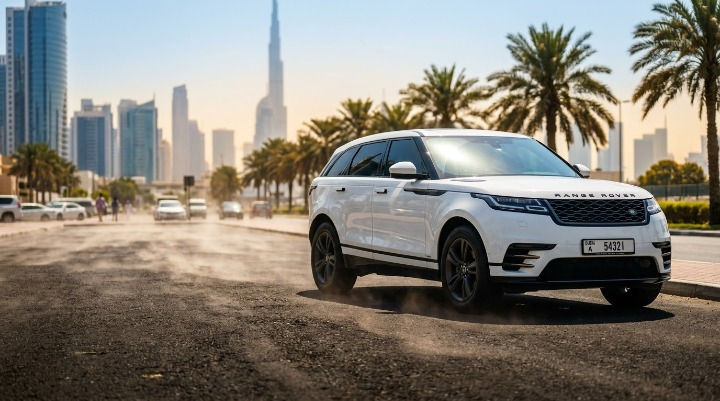
What Matters Less
Keep in mind that most often, a few commonly cited summer risks turn out to be less urgent than the warnings suggest, at least for a car that gets basic seasonal attention.
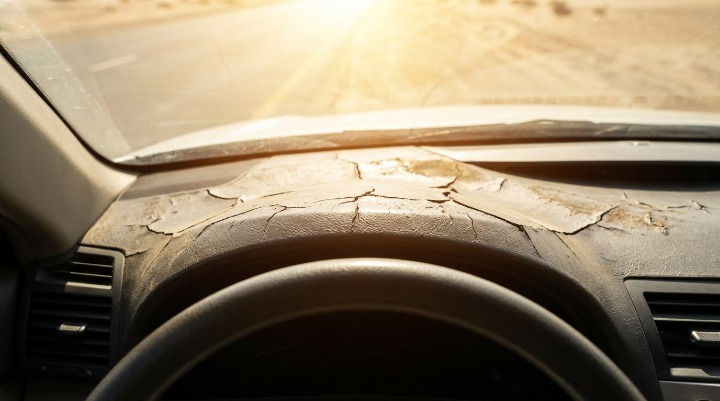
Interior fading on dashboards and leather is real but slow, a cosmetic concern rather than an immediate safety one, although prolonged direct sunlight can eventually damage dashboards, plastics, leather, and other cabin materials. Parking under cover or using a sunshade makes a noticeable difference over the years of ownership.
Engine overheating from ambient heat alone, without an underlying cooling-system fault, is less common than people sometimes suggest, especially when maintaining service schedules across UAE dealer networks since modern vehicles have cooling systems designed to operate across a wide range of conditions. But extreme UAE temperatures can expose an existing problem with the radiator, coolant, water pump, cooling fan, or hoses much faster.
Also, flat-spotting on tyres from long periods of parking is a real issue, but mostly for vehicles left stationary for weeks at a time, not a daily driver moving regularly.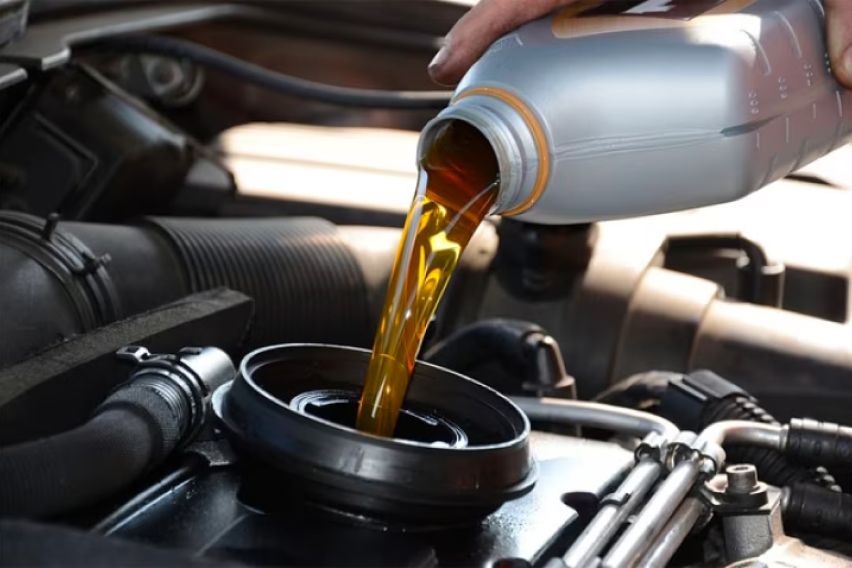
A Practical Summer Checklist
|
Component |
What To Check |
Why It Matters |
|
Battery |
Test every 6 months, especially if over 2 years old. |
Heat is the leading cause of UAE battery failure. |
|
Tyres |
Check pressure twice monthly; morning readings are most accurate. |
Reduces blowout risk on hot roads |
|
Paint |
Ceramic coating or PPF if parking outdoors regularly |
Prevents costly respray from UV oxidation |
|
AC system |
Annual service before peak summer |
Sustained strain shortens component life. |
|
Hoses and seals |
Visual inspection during routine service |
These age faster than the fluids they contain. |
Protecting Resale Value
The critical aspect of maintaining a car well in summer is that it not only ensures safety and hassle-free driving, but it also keeps the car in good shape in the long run. This also means a better chance of a real deal whenever you decide to trade it.
The heat damage does not just cost money in repairs; it shows up again at resale. A buyer looking at a used car will notice the battery condition, tyre wear, paint quality, interior condition, and AC performance, particularly in a market like the UAE, where buyers are used to inspecting cars carefully. The gap between a well-protected car and one that has spent years exposed without care can become noticeable at sale time, even if there is no single fixed dirham figure for the difference.
Covered or shaded parking alone considerably reduces direct solar exposure and cabin heat, protecting paint, dashboard, upholstery, and electronics simultaneously, which makes it arguably the single most effective and least expensive form of summer protection available. Dubai RTA itself recommends avoiding prolonged direct sunlight and using shaded parking wherever possible.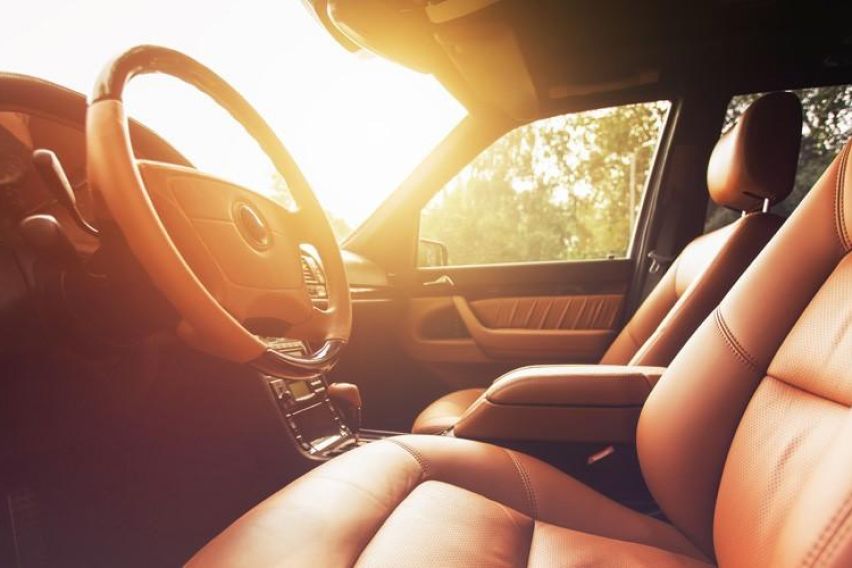
What It Means
UAE summers are tough on your car, and there's no way around it. The heat is properly hard on specific parts of a car, batteries, tyres, cooling systems, and AC systems, chief among them, and none of that is simply workshop exaggeration.
But your proactive steps can actually help you in the longer run. A car with a healthy battery, sound tyres, a properly maintained cooling system, good hoses and seals, and basic seasonal attention to the components that actually fail rarely runs into serious trouble.
Therefore, the smarter approach is spending summer maintenance money on the parts actually at risk, rather than a blanket service package built around fear of everything failing at once. Check the battery before it gets old, keep the tyres correctly inflated, make sure the cooling system is healthy, and do not ignore a weak AC. This should serve you well in your ownership without any unforeseen hassle.
Also Read: Beating the heat: Tips for summer car maintenance in the UAE
Kiran Bajad

Kiran Bajad, a seasoned automotive journalist, writes with clarity and passion, helping readers make sense of a fast-changing car market. Drawing on years of road experience and a deep understanding of global trends, he turns complex industry shifts into practical guidance for everyday buyers.
Read Full Bio-
Nissan Patrol -
Nissan X-trail -

Nissan X-terra -
Nissan Kicks -
Nissan Magnite -
Nissan Pathfinder -
Nissan Altima -

Nissan Patrol Nismo -
Nissan Urvan -

Nissan Z
- Latest
- Popular







- News
- Featured Stories






- Latest
- Upcoming
- Popular
-
 Alert Me When Launched
 -
 Alert Me When Launched
 -
 Alert Me When Launched
 -
 Alert Me When Launched
 -
 Alert Me When Launched
 -
 Alert Me When Launched


-
 Nissan Urvan29 Apr, 2026 .
 -
 Nissan Patrol Nismo01 Nov, 2025 .
 -
 Nissan X-Trail01 Nov, 2025 .
 -
 All New Nissan KICKS 2025 | Arabic01 Nov, 2025 .
 -
 All New Nissan Z Nismo01 Nov, 2025 .
 -
 NISSAN PATROL CCL01 Nov, 2025 .
 -
 Nissan Magnite Walk Around | Arabic01 Nov, 2025 .
 -
 2017 Nissan 370Z04 Jan, 2018 .
 -
 2017 Nissan Navara Pickup04 Jan, 2018 .
 -
 2017 Nissan GT-R Review04 Jan, 2018 .