UAE Car Loans in 2026: What Your Monthly Payment Really Looks Like


Abu Dhabi: Most new cars are purchased through finance in the UAE, which is a common ownership model. Buying a car is often the second-biggest expense for most families and individuals, and they often preserve liquidity through bank loans. This is not unique to our market but rather a well-established pattern around the world.
KEY TAKEAWAYS
What is a typical car loan interest rate in the UAE right now?
New car loans run 2.5 to 4.5 percent flat; used car loans run 3 to 7 percent.How much down payment do UAE banks usually require?
Around 20 percent minimum for new cars (Central Bank requirement) and 20 to 25 percent for used cars.While there are many financing options available in the UAE, getting your next new car financed needs a careful approach. A car loan quote almost always leads with the interest rate, and that number alone is not the only factor that really determines your monthly payments.
There is a real possibility that two loans appearing to have the same headline rate can produce considerably different monthly payments once you factor in the down payment, tenure, and whether the car is new or used. 
In this feature, we tell you everything you need to know about what actually shapes your monthly instalment in 2026, using current UAE bank terms rather than just the advertised rate.
Flat Rate vs. Real Cost
The single most important thing to understand before comparing loan offers is that a flat rate is not the same as the real cost of borrowing.
A flat rate is calculated on the entire loan amount for the full term, even as the balance owed goes down every month. The reducing balance rate typically reflects what you are actually paying in interest at any given point and is close to double the advertised flat rate.
Banks lead with the flat number because it looks smaller, not because it is misleading exactly, but because most buyers never ask to reduce the rate equivalent before signing.
What Shapes Payment?
|
Factor |
Typical Range |
Effect On Monthly Payment |
|
Interest rate (new car) |
2.5% to 4.5% flat |
A lower rate means a lower payment directly. |
|
Interest rate (used car) |
3% to 7% flat |
A higher rate reflects greater risk to the bank. |
|
Down payment |
20% to 25% |
A bigger down payment shrinks the loan and the payment. |
|
Tenure |
Up to 60 months (new), 12 to 48 months (used) |
Longer tenure lowers monthly pay but raises total interest paid. |
|
Salary transfer |
Optional |
Can shave 1 to 2 percent off the quoted rate |
New vs. Used Loans
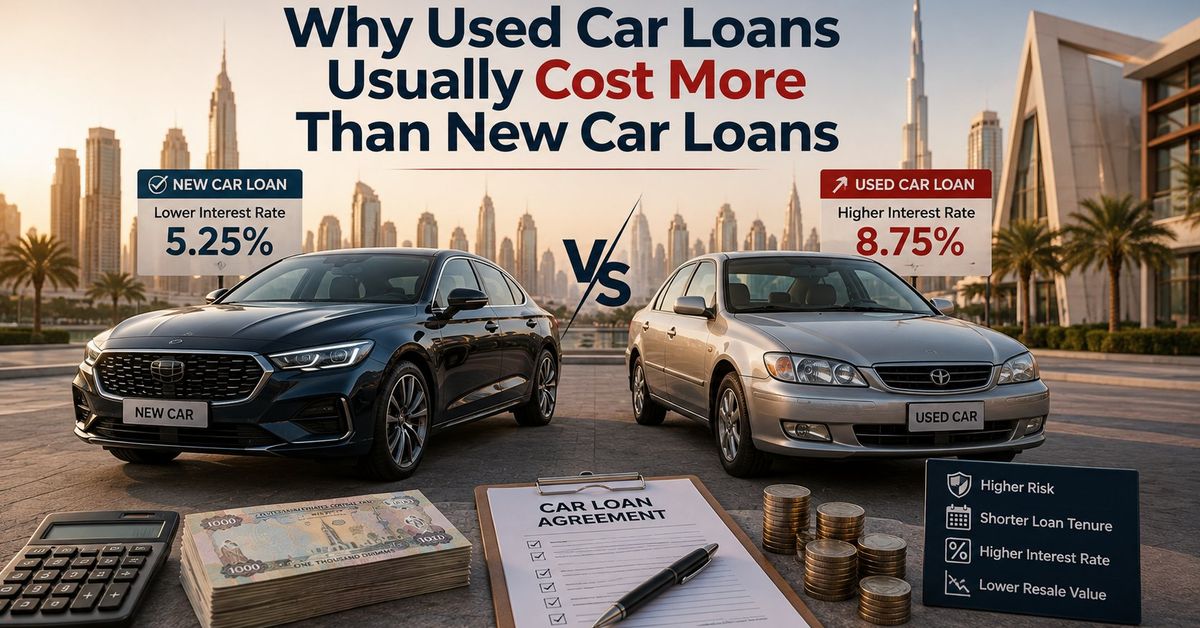
If you are thinking of financing a used car, it is not necessarily simply a smaller version of a new car loan. Banks charge more because used cars depreciate faster and carry more uncertainty about condition and maintenance history.
As loan to value on a used car typically caps at 60 to 80 percent of the car's value, against up to 80 to 100 percent on new cars, used car buyers need a bigger down payment for a similar-sized loan.
The repayment terms are shorter too, usually 12 to 48 months compared to up to 60 months on new cars, though a handful of banks stretch to 60 months for used cars under three years old.
A Real Example
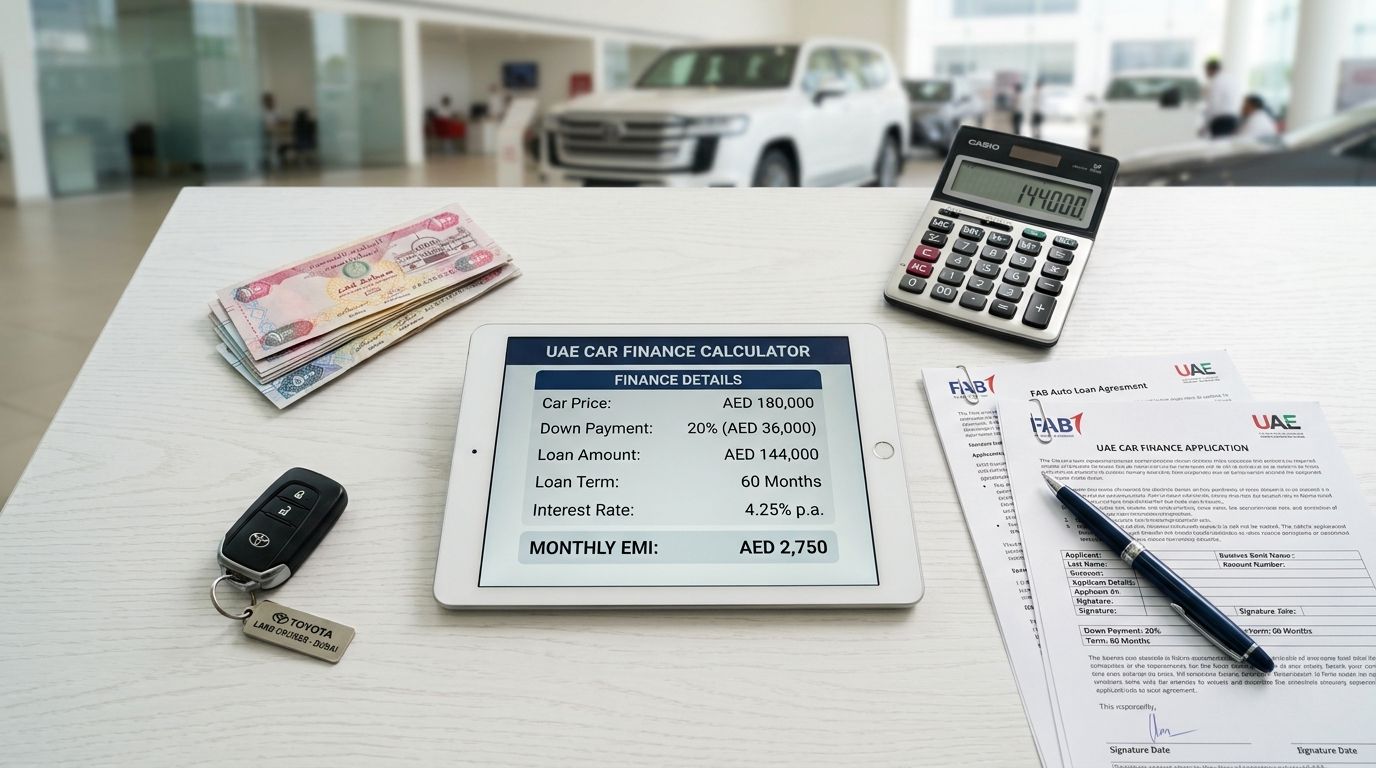
Take a car priced at AED 100,000. If financed new, at 3.5 percent flat over 60 months with 20 percent down, the monthly payment lands in a comfortable, predictable range.
But financing the same price as a used car at 5.5 percent flat over 48 months with 25 percent down, and the higher rate combined with the shorter term pushes the monthly payment up considerably, even though the loan amount itself is smaller once the bigger down payment is factored in.
The lesson is not that used cars cost more to finance in absolute terms, since the car itself usually costs less. It is that the terms behave differently enough that comparing two loan offers by interest rate alone can be misleading.
What Affects Your Rate
A few factors change the final number more than most buyers expect.
- Transferring your salary to the lending bank typically shaves 1 to 2 percent off the quoted rate, one of the biggest single levers available to any buyer.
- A credit score above 700, checked through the Al Etihad Credit Bureau, tends to unlock the best available rates. While a weaker score pushes the offer toward the higher end of the range.
- Comparing at least three banks before committing can mean a 1 to 2 percent difference on an identical loan. This can add up to thousands of dirhams over a five-year term.
- A bigger down payment reduces both the loan principal and the interest calculated against it. This results in a double saving that compounds over the life of the loan.

Costs Beyond the Rate
The offered interest rate is only part of the total bill. Some factors that can add significantly to the total cost.
- Processing fees typically run 1% of the loan amount (minimum AED 500 to 525, maximum AED 2,500 to 2,625) as a one-time charge on top of the loan.
- Early settlement fees, if you want to pay off the loan ahead of schedule, can run 1 percent or more of the outstanding balance, and not every bank waives this. The Central Bank caps this at 1% with a maximum of AED 10,000.
- Minimum salary requirements are often advertised around AED 5,000, but the better rates in practice cluster around applicants earning AED 7,000 to 8,000 or more.
Islamic Financing Too
There is another way to finance a car beyond traditional banking. The Dubai Islamic Bank, Abu Dhabi Islamic Bank, and Emirates Islamic all offer Murabaha-based car financing, structured so the bank buys the car and sells it to you at an agreed markup instead of charging interest.
The profit rates on these products are properly competitive with conventional loans, and buyers who assume Islamic financing automatically costs more are often surprised once they see an actual quote side by side.
Things to Note
- Always check every bank for a reducing rate equivalent, not just the flat rate, before comparing offers side by side.
- Try to get quotes from at least three lenders, including at least one Islamic financing option, before committing to any single offer.
- Factor processing fees and early settlement terms into your comparison, not just the monthly payment figure.
- Consider a bigger down payment if your finances allow it, since the interest saved often outweighs the value of keeping that cash liquid.
The Final Word
Buying your car through a car loan is a pretty normal decision instead of paying the full cash up front. This helps you avoid a liquidity crunch and preserve cash for emergencies and other needs.
However, before you sign the loan, which is a commitment for years, you must approach it with care and basic research. As you now know, the gap between a well-negotiated loan and one accepted without basic knowledge is rarely small, and in a market where most buyers finance rather than pay cash, that gap is worth the extra hour of comparison before you make a decision. This can help you save considerably over your car ownership time.
Also Read: The True Cost: How Much a Bigger Deposit Actually Saves You in the UAE
Kiran Bajad

Kiran Bajad, a seasoned automotive journalist, writes with clarity and passion, helping readers make sense of a fast-changing car market. Drawing on years of road experience and a deep understanding of global trends, he turns complex industry shifts into practical guidance for everyday buyers.
Read Full Bio-
Toyota RAV 4 2026 -
Toyota Fortuner -
Toyota Land Cruiser -
Toyota Corolla -
Toyota Land Cruiser Prado -
Toyota Urban Cruiser -
Toyota Yaris Sedan -
Toyota Raize -
Toyota Corolla Cross -
Toyota Supra -
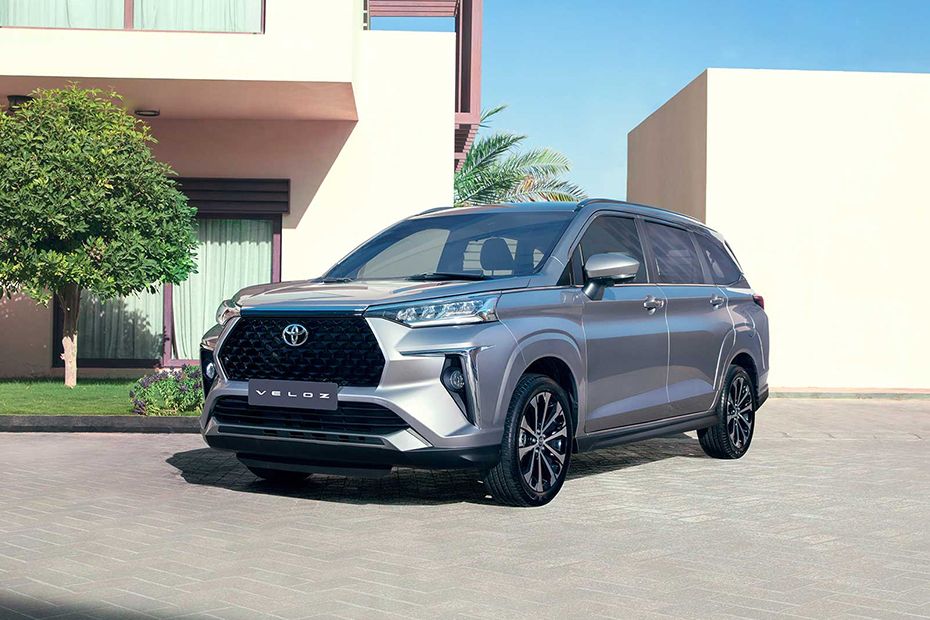
Toyota Veloz -
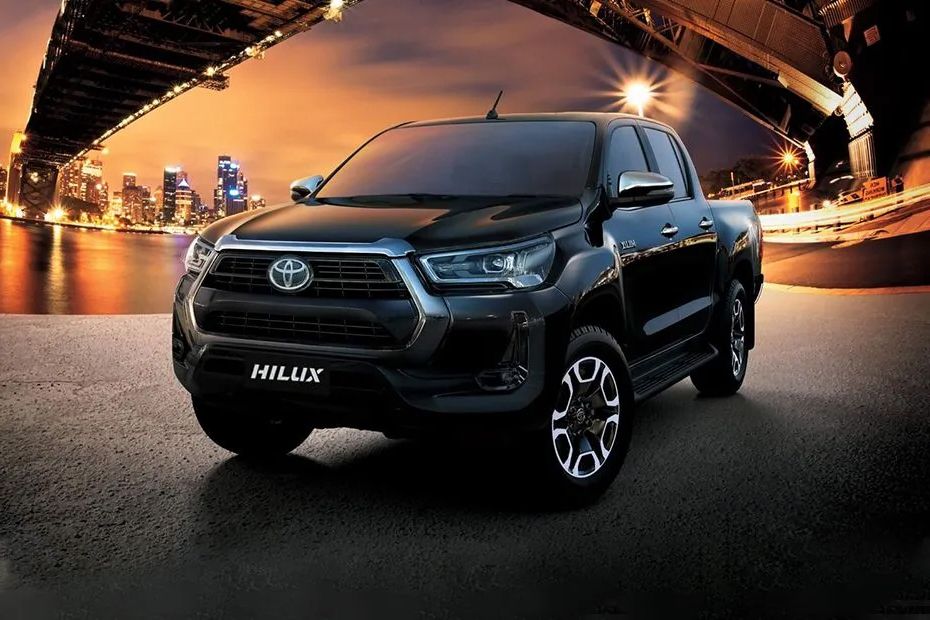
Toyota Hilux
- Latest
- Popular




- News
- Featured Stories




- Latest
- Upcoming
- Popular
-
 Toyota Land Cruiser FJPrice coming soon
 -
 Toyota TundraPrice coming soon
 -

-
-
-
-
 Alert Me When Launched
 -
 Alert Me When Launched
 -
 Alert Me When Launched
 -
 Alert Me When Launched
 -
 Alert Me When Launched
 -
 Alert Me When Launched
-
 Toyota Granvia30 Apr, 2026 .
 -
 Toyota Liteace30 Apr, 2026 .
 -
 Toyota Veloz30 Apr, 2026 .
 -
 Toyota Highlander30 Apr, 2026 .
 -
 Toyota Supra30 Apr, 2026 .
 -
 Toyota GR Corolla Overview12 Mar, 2026 .
 -
 The all-new Toyota Urban Cruiser03 Oct, 2025 .
 -
 The All-New 2024 Toyota Land Cruiser Prado03 Oct, 2025 .
 -
 2016 Toyota Land Cruiser Prices in the UAE04 Dec, 2015 . 84K views
 -
 2016 Toyota Land Cruiser - Ultimate In-Depth Look in 4K04 Dec, 2015 . 7K views