Fuel Efficiency in UAE Heat: What Cars Use vs What the Brands Promise

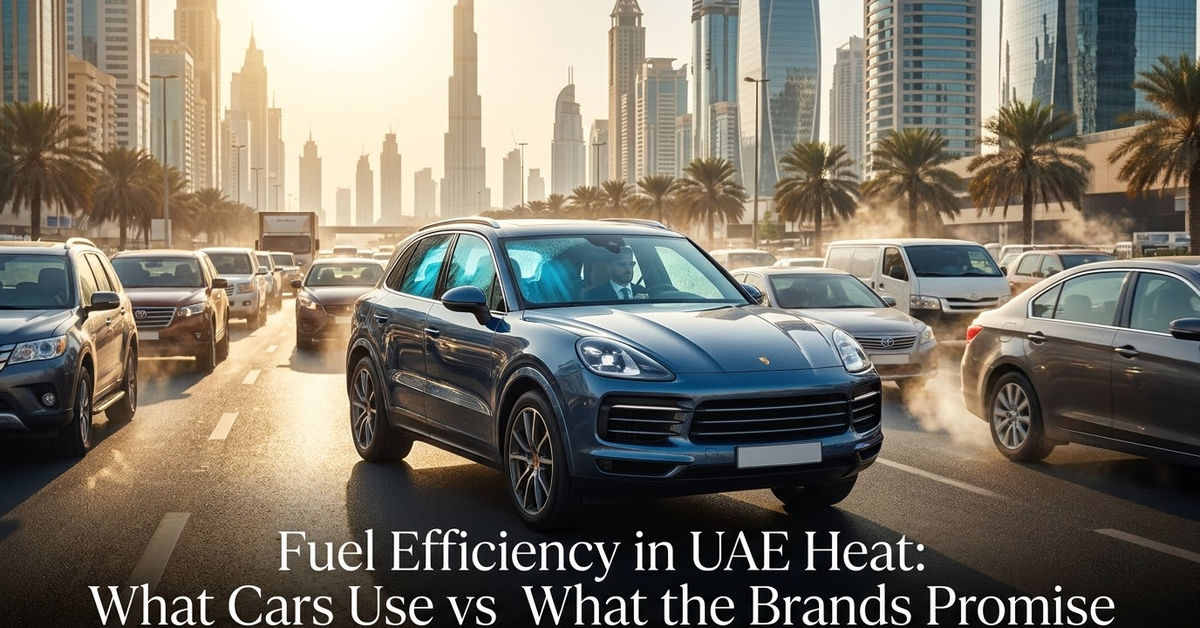
Abu Dhabi: One of the top elements of a car-buying decision is efficiency. Even in a market like the UAE, where fuel prices are lower, buyers mostly factor in the mileage. In this context, every new car in the UAE arrives with a fuel-economy figure prominently displayed on the spec, usually in km per litre. But that number hits the reality of the UAE summer, which makes it look quite different.
KEY TAKEAWAYS
Why does real fuel consumption differ so much from the claimed figure?
The WLTP test used for official figures runs without air conditioning or heating engaged at all.How much worse is real-world fuel economy in the UAE heat?
Often, various studies in comparable hot climates show real consumption running 25 to 37 per cent above the claimed figure.The gap is real, not just a local myth or a case of drivers' habits. It comes down to how that figure gets tested in the first place, under conditions that have almost nothing in common with a July commute on Sheikh Zayed Road with the AC working overtime. Understanding what a brand promises and by how much it typically falls short here is worth knowing before it becomes part of a monthly budget. We cover the details for you; read on to know more.
The Brand Number
The fuel-economy figure on a new car's spec sheet in the UAE is almost always based on WLTP (Worldwide Harmonised Light Vehicle Test Procedure), a baseline cycle that also sets benchmarks for models like the 2026 Toyota Urban Cruiser compact EV coming to UAE a standardised laboratory cycle designed to let buyers compare cars on equal terms.
The test is run in controlled conditions, at a moderate lab temperature, on a rolling road rather than an actual road, with smooth and predictable acceleration patterns that few real commutes ever match. Critically, neither the air conditioning nor the heater is switched on during the test at all, regardless of the climate the car will actually be sold and driven in.
That last detail matters more in the UAE than in almost any other market selling the same cars. A driver in a milder climate might run the AC occasionally. A UAE driver runs it constantly, often at the maximum setting, for the better part of eight months a year, and that alone accounts for a real chunk of the gap between the claimed figure and what actually shows up at the pump.
The Real Gap
Based on most independent testing in comparably hot climates, it offers a useful benchmark. A review of ten popular models tested under real conditions in Morocco, a market with a similar heat and traffic profile to parts of the UAE, found real-world fuel consumption exceeded official WLTP claims by 25 to 37 per cent, with urban congestion, summer heat, and typical load habits identified as the main causes. 
There is no reason to expect the UAE gap to be considerably smaller, and the additional AC load here likely pushes some vehicles towards the higher end of that range rather than the lower end.
|
Factor |
Effect On Real-World Consumption |
|
AC not used in WLTP testing |
Adds real consumption in daily UAE use |
|
Stop-start city traffic |
Increases consumption versus the test cycle's smoother profile |
|
Extreme ambient heat |
Reduces overall engine and battery efficiency |
|
Real-world driver behaviour |
Acceleration and braking patterns rarely match the lab cycle. |
|
Vehicle load and accessories |
Larger wheels, roof racks, and passenger load all add resistance. |
In Practice
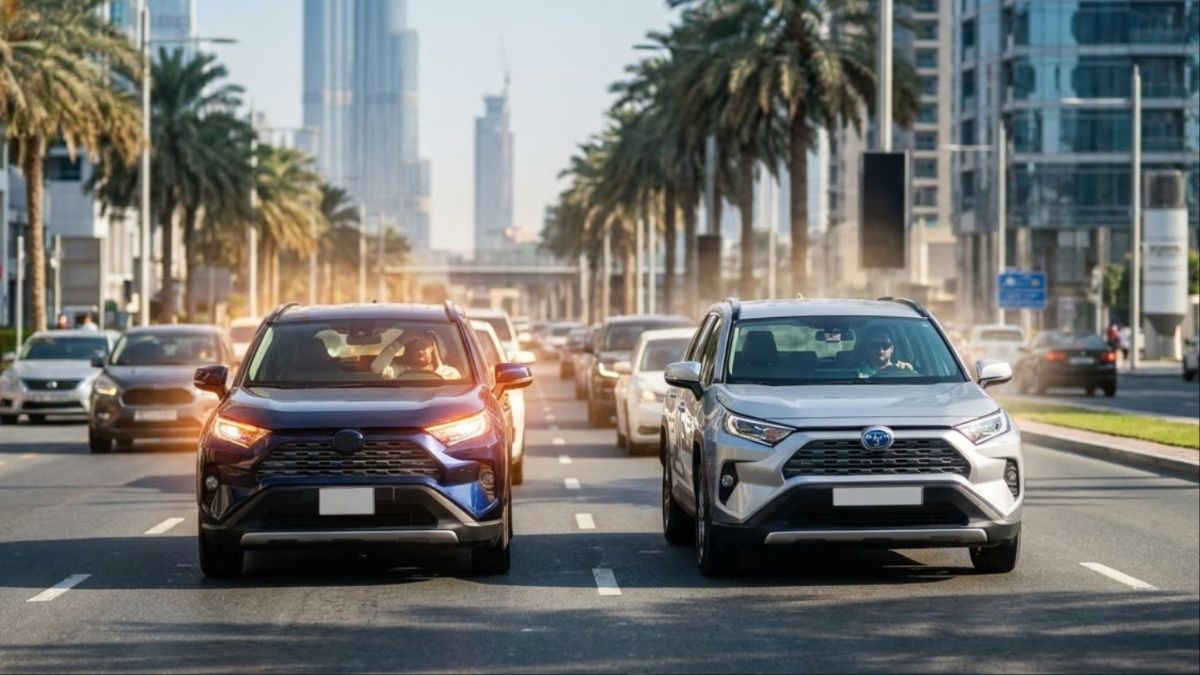
A car rated at 15 km per litre on paper is a reasonable target under WLTP conditions. In daily UAE use, with AC running and typical Dubai or Abu Dhabi traffic factored in, that same car more realistically returns somewhere between 11 and 13 km per litre, a real difference once it is multiplied across a full year of driving.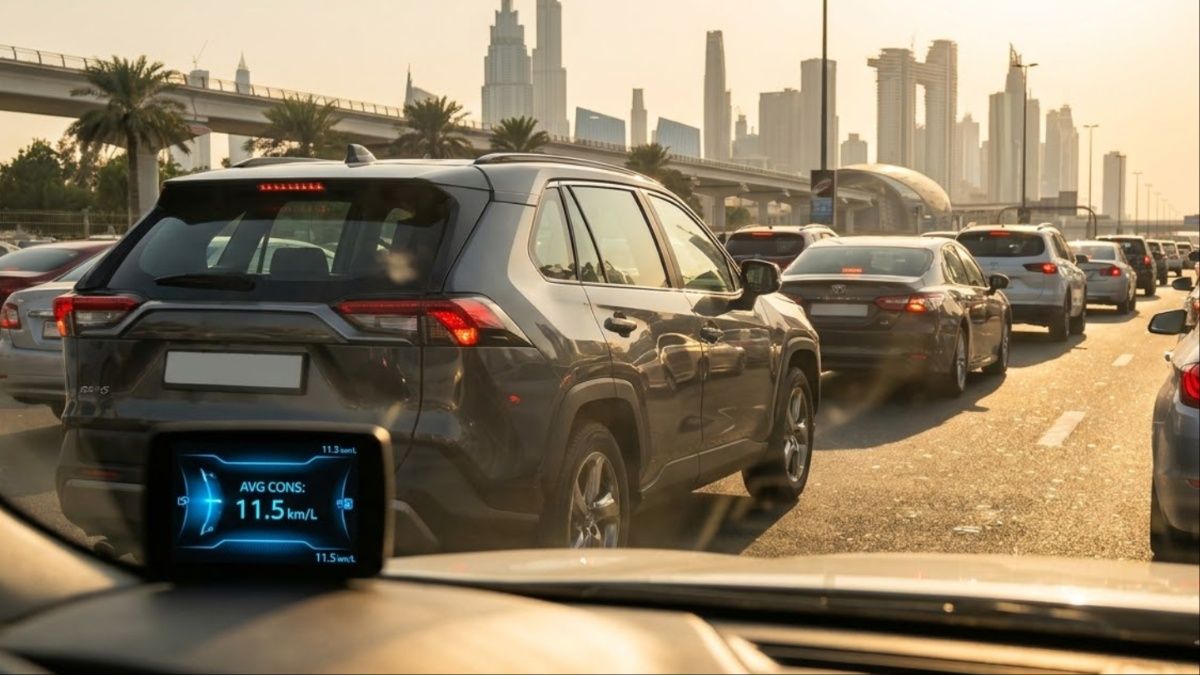
Over 20,000 km annually, the difference between the claimed figure and the realistic one can amount to several hundred litres of fuel, translating into hundreds of dirhams that a buyer did not budget for based on the brochure alone.
This change, in the case of bigger SUVs and older, less aerodynamic models, which to see a wider gap than smaller, more efficient cars, since AC load and rolling resistance both scale up with vehicle size. Likewise, hybrids generally hold up better against their claimed figures than pure-petrol vehicles do, since much of their efficiency advantage comes from low-speed and stop-start driving, exactly the conditions where WLTP already accounts for some inefficiency.
Things to Know
The same testing gap applies to electric vehicles and arguably matters even more there, since the claimed driving range directly affects how often a driver needs to charge. WLTP range testing for EVs is run without AC or heating, and cold or extreme heat can reduce real-world EV range by 10 to 20 per cent compared with the claimed figure, according to independent EV testing bodies. 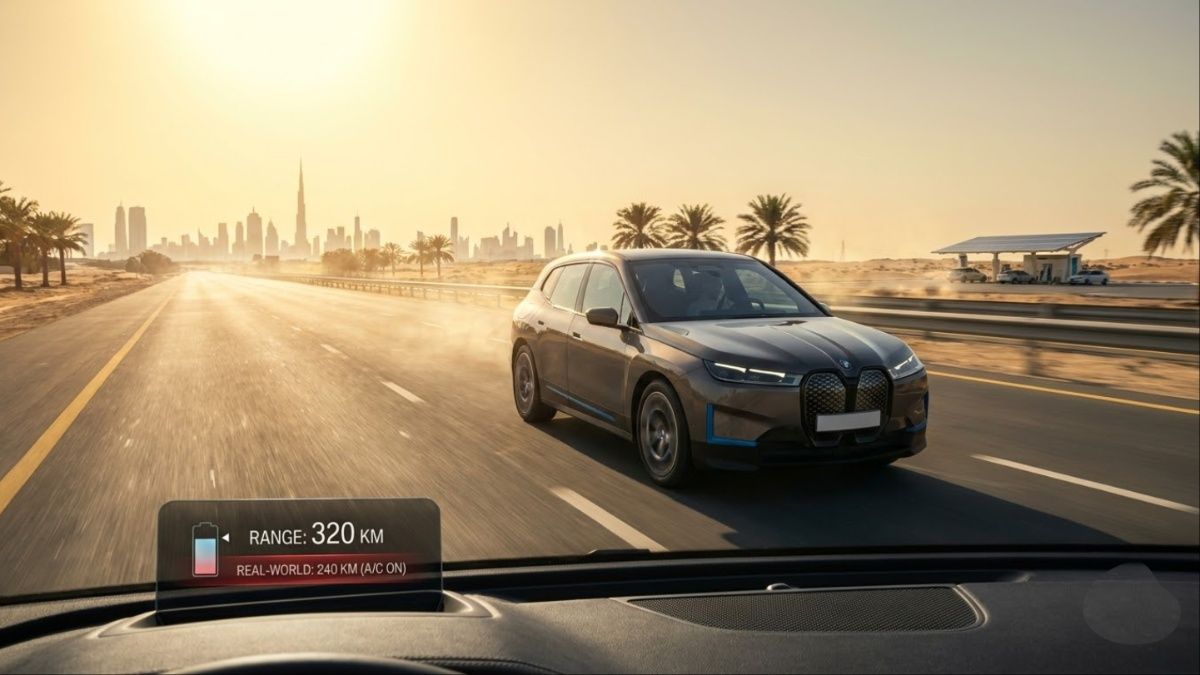
A UAE EV owner relying on a claimed 400 km range in peak summer, with AC running constantly, should realistically plan around a considerably shorter usable range, as analyzed in our data on EV battery health after two years in UAE heat particularly on longer intercity drives particularly on longer intercity drives.
What Should You Do
- Treat the claimed km per litre or claimed range figure as a best-case ceiling rather than a realistic daily average, and budget fuel or charging costs closer to 25 to 35 per cent above that number.
- Always look for real owner feedback on a specific model in UAE conditions rather than relying on the claimed figure alone, since forums and owner groups often have a far more accurate picture than official marketing material.
- Look for hybrid or smaller-displacement engines where the driving pattern is mostly city-based, since these tend to hold up closer to their claimed figures than large naturally aspirated engines under constant AC load.
- For EV owners, plan around real-world summer range rather than the claimed figure, particularly for regular trips between emirates where a shortfall matters more than it does on a short daily commute.

The Final Take
In real-world driving conditions, the gap between what brands often claim and what they actually use in UAE conditions is not an exaggeration or anything wrong with the car; it is a direct result of how the official test is built. AC alone, switched off for every single WLTP test but running almost constantly in real UAE life, accounts for a real share of the shortfall, and traffic, heat, and driving style do the rest.
Hence, all car buyers in the market must factor in a realistic 25 to 35 per cent gap from the outset and end up with a far more accurate picture of true running costs than anyone relying on the number printed on the windscreen sticker.
Also Read: What UAE Summer Heat Actually Damages on Your Car
Kiran Bajad

Kiran Bajad, a seasoned automotive journalist, writes with clarity and passion, helping readers make sense of a fast-changing car market. Drawing on years of road experience and a deep understanding of global trends, he turns complex industry shifts into practical guidance for everyday buyers.
Read Full Bio-
Nissan Patrol -
Nissan X-trail -
Nissan X-terra -
Nissan Kicks -
Nissan Magnite -
Nissan Pathfinder -
Nissan Altima -
Nissan Patrol Nismo -
Nissan Urvan -

Nissan Z
- Latest
- Popular









- News
- Featured Stories





- Latest
- Upcoming
- Popular
-
 Alert Me When Launched
 -
 Alert Me When Launched
 -
 Alert Me When Launched
 -
 Alert Me When Launched
 -
 Alert Me When Launched
 -
 Alert Me When Launched


-
 Nissan Urvan29 Apr, 2026 .
 -
 Nissan Patrol Nismo01 Nov, 2025 .
 -
 Nissan X-Trail01 Nov, 2025 .
 -
 All New Nissan KICKS 2025 | Arabic01 Nov, 2025 .
 -
 All New Nissan Z Nismo01 Nov, 2025 .
 -
 NISSAN PATROL CCL01 Nov, 2025 .
 -
 Nissan Magnite Walk Around | Arabic01 Nov, 2025 .
 -
 2017 Nissan 370Z04 Jan, 2018 .
 -
 2017 Nissan Navara Pickup04 Jan, 2018 .
 -
 2017 Nissan GT-R Review04 Jan, 2018 .