Caring for Your Mercedes Benz: Practical Tips for Optimal Performance

- KEY TAKEAWAYS
- W223 S-Class Suspension: Identify the System Before the Fault
- Warning Messages: A Starting Point, Not a Parts List
- Brakes: Assess the Whole System, Not Just the Pads
- Older Mercedes-Benz Vehicles: Ageing Components Need Attention Too
- Used and Imported Cars: Establish the Condition Before Committing
- The Common Thread: Diagnose First, Then Repair
Dubai: A suspension warning, a change in braking performance or a small fluid leak can leave a Mercedes-Benz owner facing the same question: what actually needs repairing?
KEY TAKEAWAYS
How to diagnose W223 S-Class suspension issues?
Identify if car has AIRMATIC or E-ACTIVE BODY CONTROL first. Check settling after parking, compressor operation, air springs, lines, valve block and height sensors with XENTRY diagnostics before replacing parts.When should Mercedes brake discs and pads be changed?
Check pad thickness and disc wear separately against Mercedes limits, do not skim discs, replace fluid every two years, and use service mode for electronic parking brake. Noise needs full system check.The answer is not always the component that first appears to be at fault. Modern Mercedes-Benz vehicles combine mechanical systems with electronic control, and a single symptom can have several possible causes.
UAE heat, dust and demanding driving conditions make careful maintenance important, but they do not establish the cause of an individual problem. The following examples explain how suspension, braking and age-related faults should be investigated, without assuming that every model develops the same issues.
W223 S-Class Suspension: Identify the System Before the Fault
Suspension equipment on the W223-generation S-Class varies according to model and specification. Understanding what is fitted is the first step towards an appropriate diagnosis.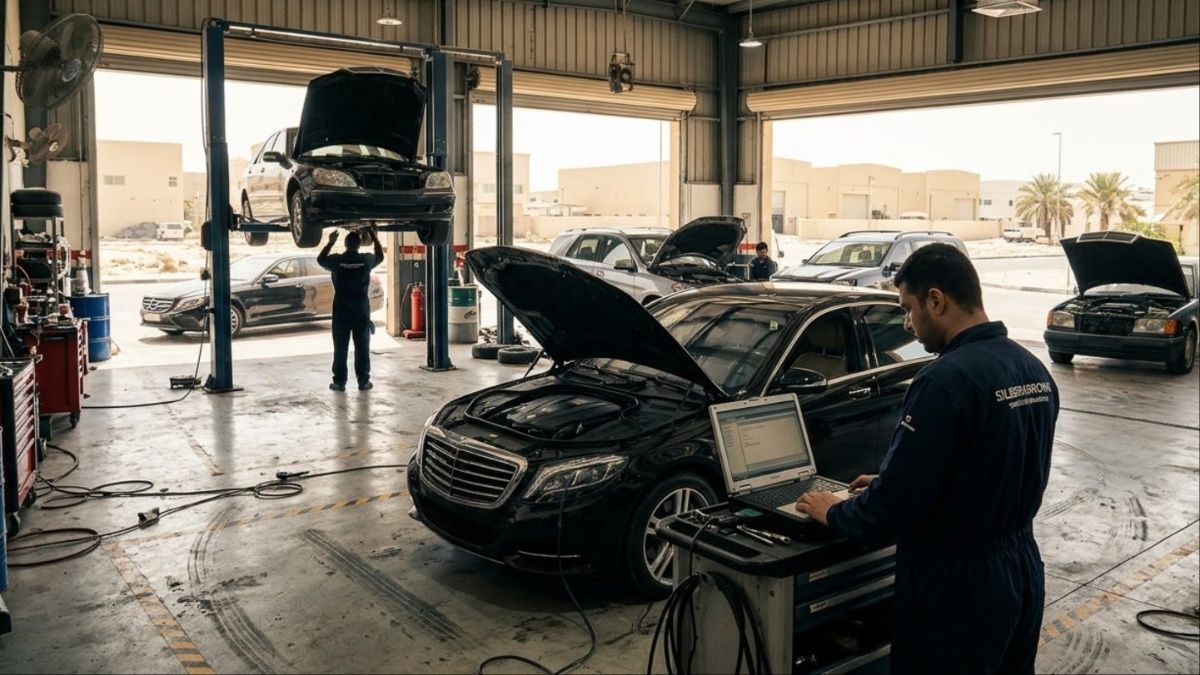
AIRMATIC combines air suspension with electronically controlled damping and automatic level control. E-ACTIVE BODY CONTROL, where fitted, combines air suspension with an actively controlled electrohydraulic system that manages suspension forces at the individual wheels.
Although both systems use air suspension, the additional hydraulic components and control functions on E-ACTIVE BODY CONTROL mean the assessment must be specific to the equipment fitted.
Symptoms worth investigating include repeated excessive or uneven settling after parking, difficulty reaching the correct ride height, unusually frequent compressor operation, suspension warnings and a marked deterioration in ride comfort or stability.
A car sitting low does not, by itself, prove that an air strut needs replacing. Excessive loss of height while parked calls for investigation of the air springs, lines, connections and valve block. Difficulty raising the vehicle can also involve compressor performance, its electrical supply or other control faults. Height-sensor information and calibration should be checked where the symptoms and test results justify it.
On vehicles with E-ACTIVE BODY CONTROL, the additional hydraulic and electronic elements must also be considered. Parts and repair procedures should be identified for the actual vehicle, rather than selected simply because it is an S-Class.
An unresolved air leak can force the compressor to operate more frequently. Over time, excessive operation can contribute to compressor damage, making it important to address the original fault rather than repeatedly replace the component affected by it.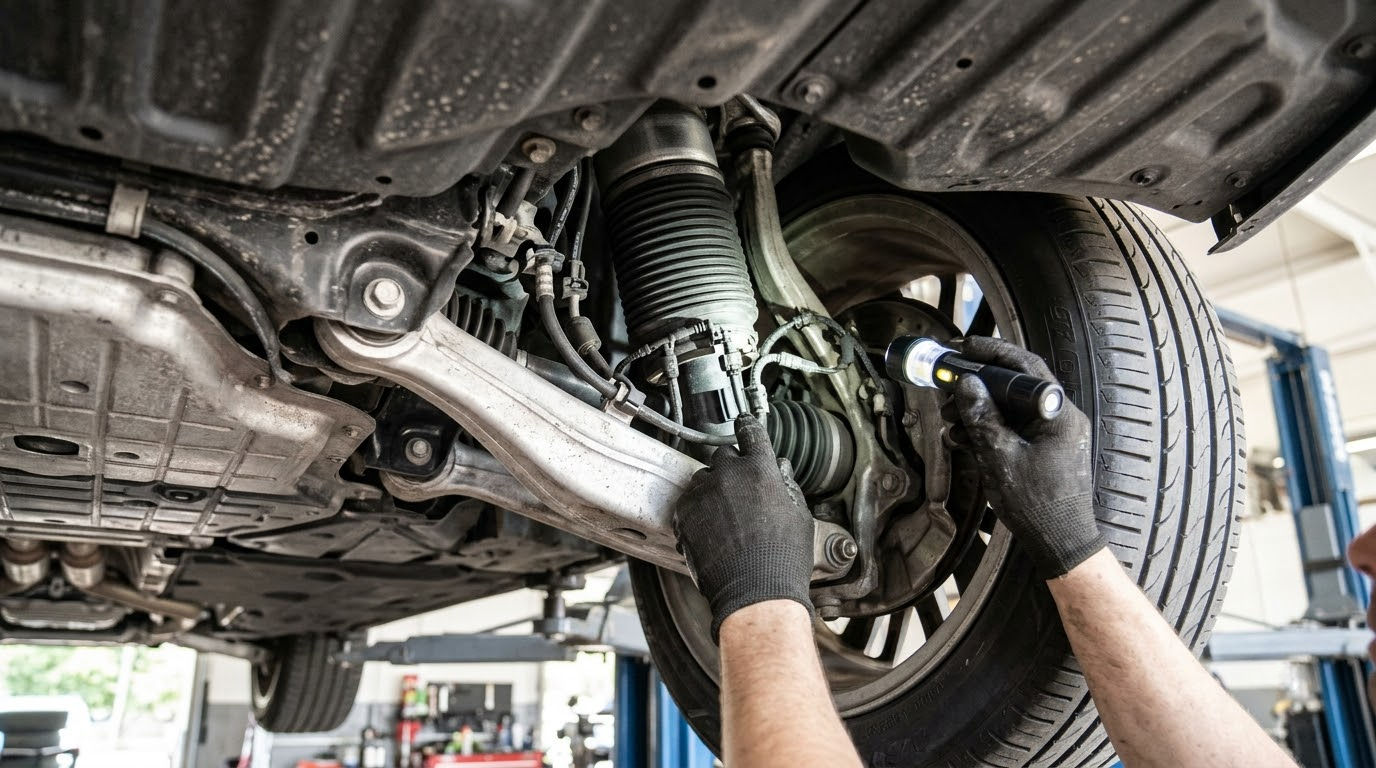
SilberArrows discusses W223 S-Class suspension problems in Dubai in more detail, including symptoms and the importance of diagnosing the system correctly.
Always follow the vehicle's warning messages. If it instructs you to stop, cannot maintain a safe ride height or has seriously impaired handling, stop safely and arrange professional assistance rather than continuing the journey.
Warning Messages: A Starting Point, Not a Parts List
A suspension warning does not necessarily indicate a failed air spring or compressor. Electrical supply problems, wiring faults, communication errors and software-related issues can also affect electronically controlled systems.
The same principle applies to engine management, transmission control, air-conditioning and driver-assistance systems. A warning identifies a problem that needs investigation; it does not necessarily identify the failed component.
Mercedes-Benz XENTRY diagnostics can retrieve relevant fault information, display supported live data and guide further testing. Some programming and coding operations require additional authorisation or online access.
A proper investigation combines that information with the owner's description of the symptoms, physical inspection and appropriate electrical or mechanical tests. Where low voltage is suspected, for example, battery and charging-system checks may be necessary before condemning a control unit.
Clearing a fault code or replacing a component named in its description is not, on its own, evidence that the underlying problem has been resolved. The repair should be followed by checks appropriate to the original complaint.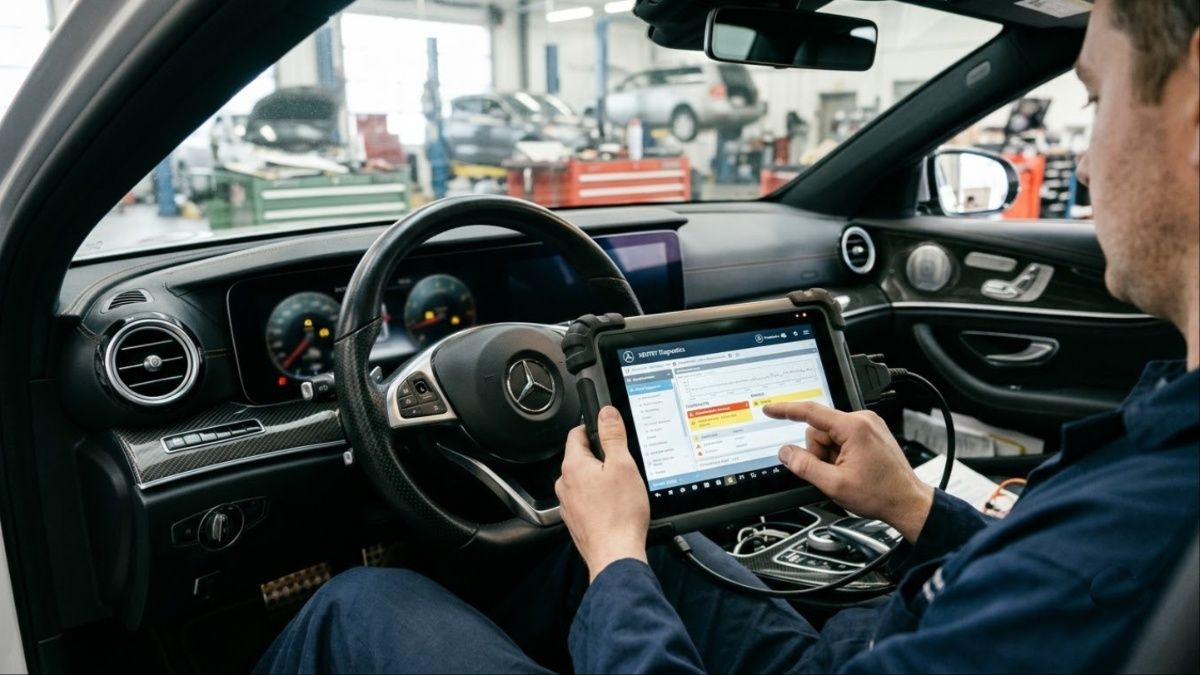
Brakes: Assess the Whole System, Not Just the Pads
Brake wear depends on how a vehicle is used, as well as its specification and condition. Frequent braking in traffic can increase wear, but the need for replacement should be established through inspection and measurement rather than assumptions about climate or mileage alone.
Pads and discs need separate assessment. Brake pad thickness and condition should be checked alongside disc thickness, surface condition and the manufacturer's limits. Fitting new pads does not make a worn-out disc serviceable. Equally, replacing discs at every pad change should not be treated as a universal requirement.
If pads are allowed to wear through their friction material, metal-to-metal contact can damage the disc. Timely inspection helps identify pad wear before it reaches that stage.
Mercedes-Benz brake discs must not be skimmed or resurfaced. Discs that have reached the manufacturer's specified wear limit, or are otherwise unserviceable, must be replaced. Replacement decisions should be based on inspection, measurements and the applicable Mercedes-Benz repair requirements.
Noise and vibration need diagnosis. Brake noise, vibration or an inconsistent pedal feel can have more than one cause. The inspection may need to include disc condition, calliper operation, mounting surfaces and related components, rather than assuming the pads alone are responsible. Replacement parts must be correct for the vehicle and its braking system.
Electronic systems require the correct procedure. Depending on the model and work involved, brake servicing may require a prescribed electronic parking-brake service mode and subsequent checks or adjustments. The required service-mode, adjustment and verification steps vary, so the workshop must follow the instructions applicable to that vehicle and repair.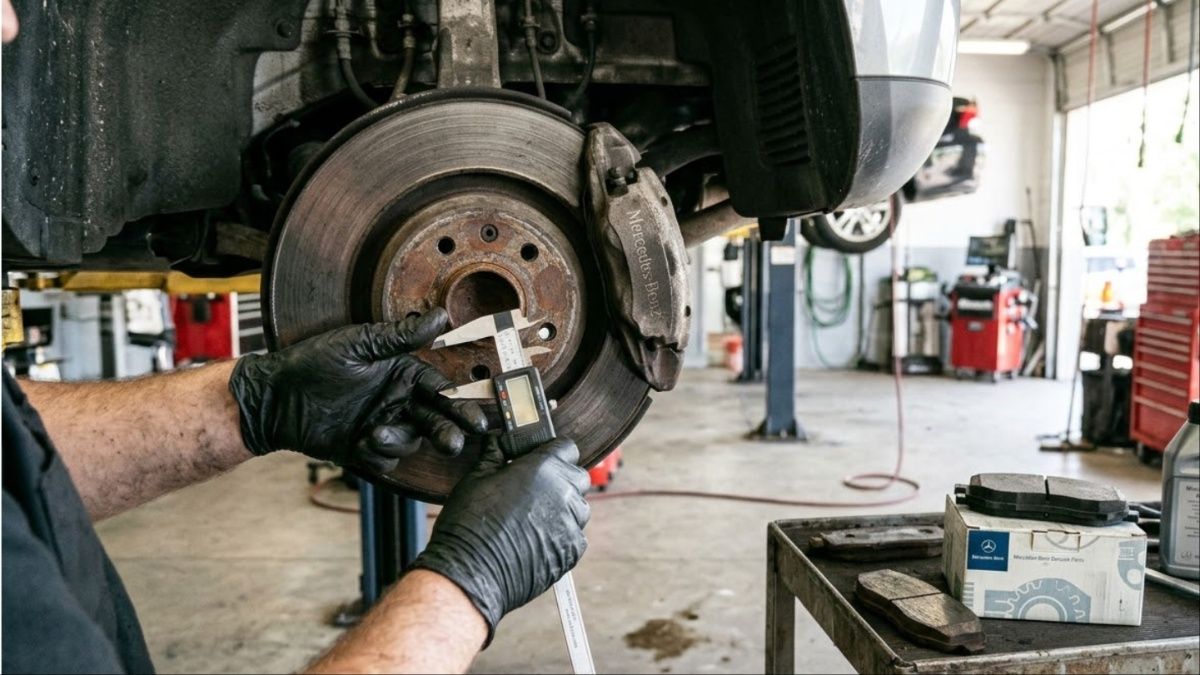
Brake fluid is a separate maintenance item. Mercedes-Benz generally specifies brake fluid replacement every two years, regardless of mileage. Brake fluid absorbs moisture over time, lowering its boiling point and potentially reducing braking effectiveness under demanding conditions. Replacement should follow the maintenance requirements for the particular vehicle and use the correct Mercedes-Benz-approved fluid, even when the brake pads and discs remain within their service limits.
A significant reduction in braking effectiveness or a warning instructing the driver to stop requires immediate attention. Stop safely and arrange professional assistance; do not treat it as a routine inspection to book later.
Older Mercedes-Benz Vehicles: Ageing Components Need Attention Too
As a Mercedes-Benz gets older, routine servicing remains essential, but it is only part of the maintenance picture. Components can deteriorate with age as well as mileage.
Areas worth assessing include suspension bushes and mounts, engine and transmission seals, coolant hoses and other cooling-system components, belts, pulleys, tensioners, air-conditioning components and electrical connections.
Not every ageing part needs replacement. A useful inspection distinguishes between components that remain serviceable, issues that can be monitored and faults requiring prompt action.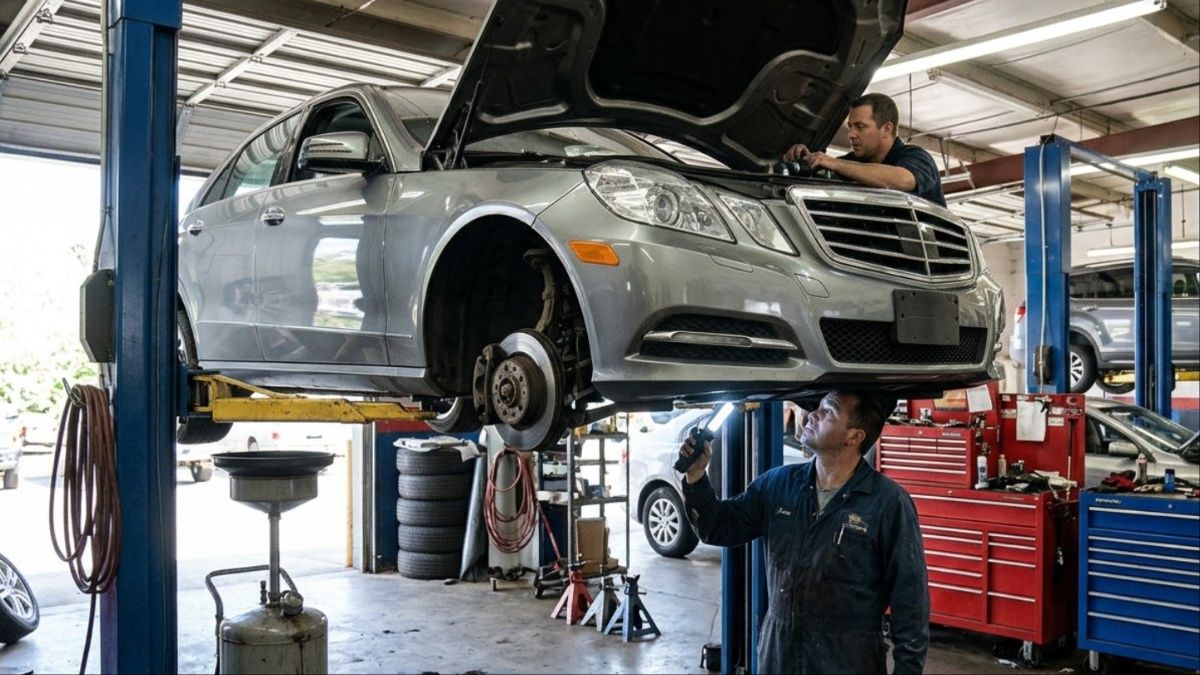
For example, a minor oil seep and an active leak do not necessarily require the same response. The location, severity and potential consequences should determine the recommendation. A coolant leak, a steering defect or contamination of nearby components may warrant more urgent attention.
Older vehicles can still require manufacturer-specific diagnostics. Age alone does not make a warning message straightforward to interpret or remove the need to follow the correct repair procedure.
Used and Imported Cars: Establish the Condition Before Committing
A test drive is useful, but it cannot reveal every developing fault, stored warning or overdue maintenance item. Wherever possible, arrange an independent pre-purchase inspection before committing to a used Mercedes-Benz.
The assessment should combine the available service history, a physical inspection and appropriate diagnostics. A diagnostic scan using Mercedes-Benz XENTRY can add useful information, but it is not a substitute for inspecting the vehicle or a guarantee that no hidden faults exist.
For a car already purchased, a post-purchase inspection can still establish a practical maintenance baseline. The findings should distinguish between safety-related defects, work that is due and components that can be monitored.
Imported vehicles require particular attention to their actual specification. Two Mercedes-Benz vehicles with the same model badge may have different engines, equipment, emissions systems or market-specific components.
Parts and maintenance requirements should therefore be identified using the vehicle identification number and the relevant vehicle data, with the fitted components checked where necessary. Country of origin alone is not a reliable guide to a car's condition or the repairs it needs.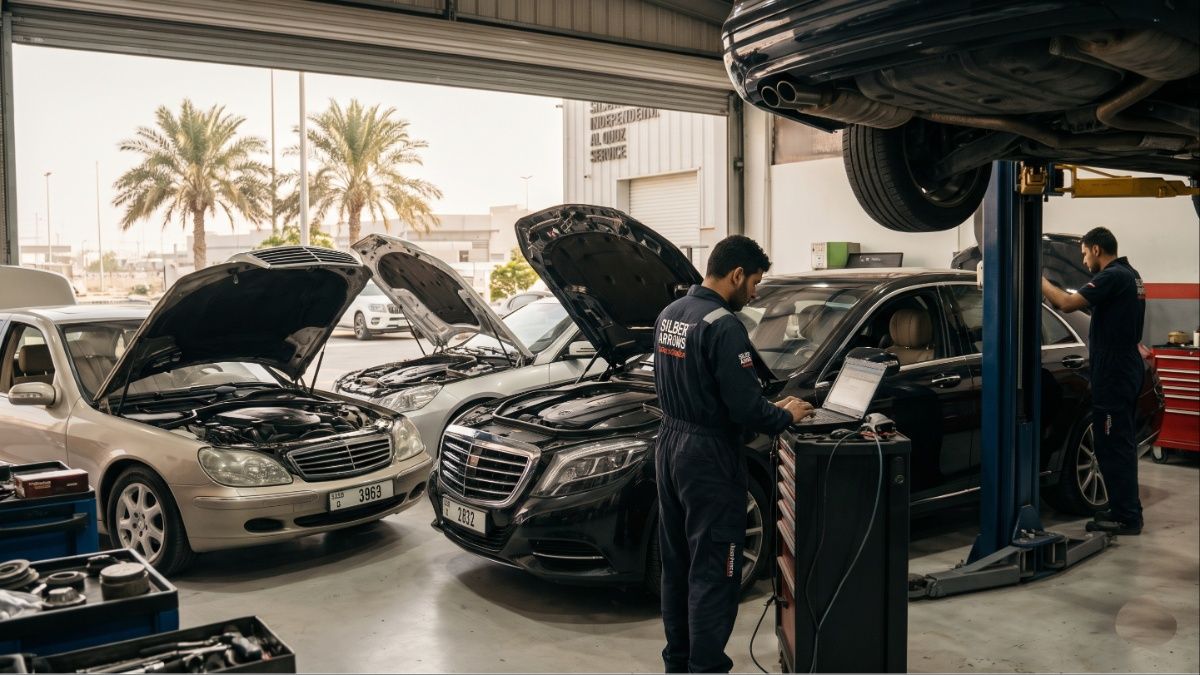
The Common Thread: Diagnose First, Then Repair
Across suspension faults, braking concerns and ageing components, the principle is the same: establish the cause before recommending replacement parts.
Owners should expect a clear explanation of the findings, a written quotation for the proposed work and approval requests before additional repairs proceed. Diagnostic work may be needed before a reliable repair quotation can be prepared.
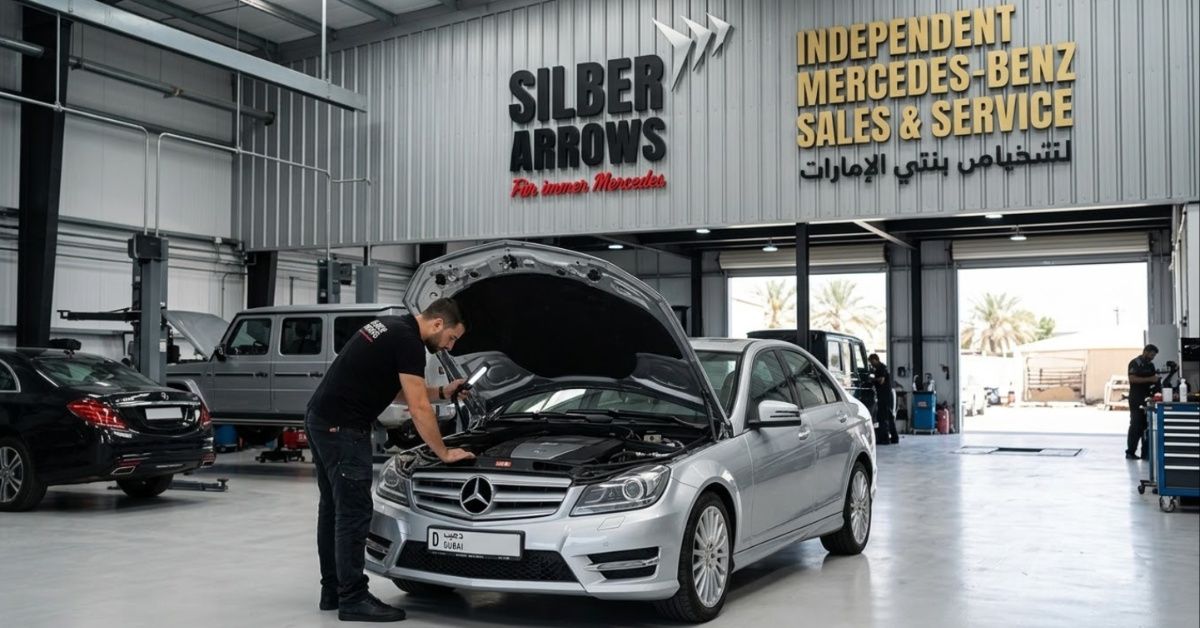
SilberArrows, the independent Mercedes-Benz specialist in Al Quoz, works exclusively on Mercedes-Benz passenger vehicles. Its approach combines XENTRY diagnostics, relevant physical and functional checks, Mercedes-Benz GenuineParts and manufacturer-prescribed maintenance and repair procedures.
The aim is not to replace as much as possible. It is to identify what is wrong, explain what genuinely needs attention and complete the appropriate repair, with suitable checks before the vehicle is returned to its owner.
Also Read: 483 bhp Electric Sedan, 760km Range: Mercedes' C-Class EV Explained (And When It Arrives in UAE)
-

Mercedes-Benz G-Class -

Mercedes-Benz Maybach GLS -

Mercedes-Benz Maybach S Class -

Mercedes-Benz V-Class -

Mercedes-Benz AMG SL -

Mercedes-Benz C-Class Sedan -

Mercedes-Benz AMG CLE -

Mercedes-Benz GLC-Class -

Mercedes-Benz AMG GT -

Mercedes-Benz GLB-Class -

Mercedes-Benz E-Class Sedan -

Mercedes-Benz GLA-Class
- Latest
- Popular










- News
- Featured Stories






- Latest
- Upcoming
- Popular


-
 Alert Me When Launched
-
 Alert Me When Launched
-
 Alert Me When Launched
-
 Alert Me When Launched
-
 Alert Me When Launched


-
 The all-new Electric G-Class03 Oct, 2025 .
-
 2014 Mercedes-Benz E-Class (E350) Start Up and Review 3.5 L V625 Nov, 2015 . 169K views
-
 2010-2011 Mercedes-Benz E-Class review | Consumer Reports25 Nov, 2015 . 367K views
-
 Review: 2010 Mercedes-Benz E350 4Matic25 Nov, 2015 . 164K views
-
 Mercedes-Benz E Class 2015 Start Up Drive In Depth Review Interior Exterior25 Nov, 2015 . 540K views
-
 2015 Mercedes-Benz E-Class E350 Start Up and Review 3.5 L V625 Nov, 2015 . 110K views
-
 2013 Mercedes-Benz GL-Class Walkaround25 Nov, 2015 . 27K views
-
 2015 Mercedes-Benz GL-Class GL63 AMG - Exterior and Interior Walkaround - 2014 LA Auto Show25 Nov, 2015 . 92K views
-
 2015 Mercedes-Benz GL-Class Rockville Centre, Nassau, Long Island, New York, Queens, NY FA25 Nov, 2015 . 9K views
-
 2014 Mercedes-Benz E-Class Sedan Review | Edmunds.com25 Nov, 2015 . 62K views