Latest Corporate Car Buying Guide in UAE - New Fleet Benefits for Businesses


The corporate sector is a major new car buyer in the UAE’s overall automotive market. Over the last few years, this segment has been recording sustained growth, driving overall sales. This underlines companies' appetite for buying more cars for employee use, prompting a wide range of deals.
KEY TAKEAWAYS
What are the top three factors when buying a corporate car in the UAE in 2025?
Cost efficiency, reliability, and maintenance expenses matter the most for corporate buyers.Which are the popular brands among corporate buyers in the UAE?
Toyota, Nissan, and Mercedes-Benz are the most preferred car brands in the UAE.Eyeing an opportunity, banks are offering attractive financing schemes. Likewise, automakers are looking for bulk volumes with tailor-made plans and discounted prices. Used car values are holding up well, which matters when you're planning to upgrade your fleet in three or four years. For any company today seeking to expand its corporate fleet, there is no better time to explore the best deals.
The Case for Corporate Buying Today
If you’re in the market for renewing your fleet, there is no better time than 2025. Interest rates have stabilized after the hikes in 2023. Most banks in the UAE are offering fleet financing competitively between 3.5% and 4.5% for established companies. This is lower than the usual 5%+ rates that were about 18 months ago. The corporate tax implementation is no longer a deterrent for businesses in expanding their fleet. In fact, it is now much cleaner, as companies know exactly what is there to claim, and depreciation rules are straightforward.
There is one more positive, as insurance companies are fiercely competing for fleet business. Corporations no longer need to pay full retail prices, as these prices have become less common, and bulk discounts of 20-30% are now typical when insuring five or more vehicles.
Market Trends
It is not hard to check what businesses are buying these days; just take a walk around the Dubai or Abu Dhabi business district, and it is easy to spot. Believe it or not, Japanese brands still dominate. No surprise that Toyota and Nissan continue to lead in overall volume sales and are the most preferred brands for most companies. However, a shift is visible too.
It is no longer a hidden fact that the Chinese brands are continuing to make serious inroads in a domain previously dominated by Japanese and European brands. BYD's electric and hybrid lineup is now visible across corporate parking lots. Other brands, including Chery and Haval, are winning fleet contracts with government entities and semi-government organizations.
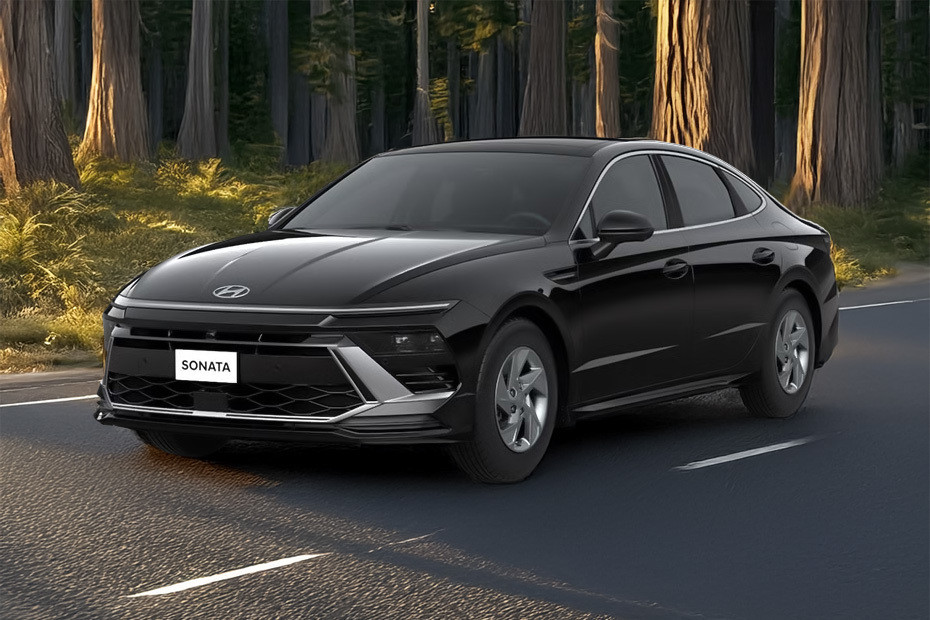
While SUVs are the flavor, sedans are making a comeback for corporate use. The Toyota Camry and Honda Accord remain top choices for executive transport. At the middle level, managers prefer the Nissan Altima or the Hyundai Sonata. These cars are an obvious choice for their lower service costs and higher resale values.
For sales teams and site operations, evidently, pickups are the choice. The Ford Ranger, Toyota Hilux, and Isuzu D-Max continue to dominate this segment. They handle UAE roads well and can serve double duty as work trucks and daily drivers.
Fleet Financing Options Right Now
Among the several options, it is clear that Emirates NBD, ADCB, and Mashreq are the most aggressive on fleet financing. To attract buyers, several key incentives and customized plans are on offer. This includes tenure up to seven years, with the usual three- and five-year terms.
Also, the minimum fleet size requirements have come down considerably. Some banks will consider fleet rates for just three vehicles if your company has solid financials. Just look a few years back; it was a minimum of five units to qualify for a loan.
Generally, buyers prefer balloon payment structures, as you pay lower monthly installments and settle a larger amount at the end. This works if you plan to trade in vehicles regularly. The balloon typically represents about 20–30% of the vehicle value.
Things like operating leases are gaining traction. In this contract, you don't own the car, but you get predictable monthly costs that include maintenance and insurance. You can consider companies like Al-Futtaim and Juma Al Majid that have such plans, which are aggressive. The monthly payments are approximately 15-20% higher than finance payments, but the significant advantage is the lack of hassle regarding maintenance or resale.
Maintenance and Service Options
What really matters more than the real price is the service and maintenance cost. A cheap car isn't a good deal if service costs more.
And again, choosing the right brands matters. Toyota and Lexus service packages are considered the gold standard in the industry, and they are the preferred choice for most corporations. You pay upfront for three or five years of maintenance, and costs are fixed. Importantly, there are no surprises, including the availability of parts, which is quite excellent across the UAE.
German brands are premium ones, and so they cost more to run. For example, a BMW 5 Series is an appealing executive fleet; it costs almost double compared to a Japanese equivalent. Parts take longer to arrive, and you need specialized service centers, all of which means you end up paying more.
Chinese brands are improving their service networks, and they continue to invest in this aspect to attract more buyers. EV major BYD has opened multiple service centers in Dubai and Abu Dhabi; as a result, the waiting times have dropped significantly. But this is not the case if you're operating in the Northern Emirates; there could be a delay. While the Korean brands are quite the middle path, both Hyundai and Kia offer good build quality, reasonable purchase prices, and service costs that sit between Japanese and German levels.
Electric and Hybrid Fleet Options
Like an average buyer, even corporations no longer ignore the new trend of either EVs or hybrids for their obvious benefits. With the expansion of DEWA's infrastructure, EVs are now viable for business use. There are now over 500 public charging points across Dubai, and Abu Dhabi is catching up rather fast, too.
BYD leads the corporate EV space, especially with the Seal sedan and Atto 3 SUV, becoming the preferred choice of fleet orders. While EVs are expensive, when it comes to monthly running costs, they drop by about 60% compared to petrol vehicles. A Seal costs roughly AED 150-200 per month in electricity versus AED 600-700 in petrol for an equivalent sedan, which is quite a difference.
The quintessential Tesla has corporate leasing programs, but they're expensive. The Model 3 is one excellent option for executive transport; however, the brand is slow when it comes to service. This is due to the parts, which come from either Europe, China, or the US, taking weeks.
But looking a little deeper, hybrid options make more practical sense for companies not ready for full electric. The Toyota Camry Hybrid offers 20-25 km/l fuel economy. Over 50,000 km per year, which is common for a typical company car, would save considerably, between AED 8,000 and 10,000 in annual fuel costs versus AED 15,000-18,000 for the petrol version.
Insurance and Registration Perks
Unlike personal cars, most corporate fleets have the advantage of registration. If a company registers for five or more cars under a commercial trade license, the RTA can help you save up to AED 200-300 per vehicle. Likewise, third-party insurance makes sense for older fleet vehicles, and once a car reaches five years of tenure and depreciation has done its work, comprehensive coverage costs more than it's worth. If you make a switch to a third party, there are up to 60-70% savings on premiums. Also, it is worth noting that there are insurance companies that offer fleet management services, too. AXA and Oman Insurance have accident management, replacement vehicles, and direct settlement with repair shops.
Plan Resale Value
This is one area where smart decisions could help a huge win for fleet managers. By buying the right cars, which are reliable and of superior build quality, you get a better price at the time of sale.
In today’s market, a three-year-old Toyota or Nissan car fetches upward of 55-60% of the original price. That's strong depreciation protection, while German cars drop a lot—often up to 45–50% in three years.
Also, the color matters for the fleet, and some common popular ones like white, silver, and black cars sell fastest. So it's better to avoid unusual colors for fleet purchases. Low mileage matters enormously; up to 25,000 km is great. Once you cross 100,000 km total, resale values drop significantly. What also makes a difference is a full service history from authorized dealers, adding resale value of up to 5-10%.
Tax Implications and Depreciation
In the UAE, corporate tax allows vehicle depreciation over five years. This is 20% per year, straight-line depreciation, and you can claim this against your taxable income. Similarly, fuel costs are fully deductible as business expenses. Even if cars are used for personal use by employees, they qualify for benefit-in-kind considerations.
Key Fleet Specifications Comparison
|
Specification |
Toyota Camry |
Honda Accord |
BYD Seal |
Nissan X-Trail |
Ford Ranger |
|
Ideal Use Case |
Executive/Mid-Management |
Executive/Mid-Management |
Executive (Electric) |
Family/Multi-purpose |
Sales/Operations |
|
Fuel Economy |
14-16 km/l (Petrol) / 22 km/l (Hybrid) |
13-15 km/l |
650km range (Electric) |
12-14 km/l |
10-12 km/l |
|
Service Interval |
10,000 km |
10,000 km |
15,000 km |
10,000 km |
10,000 km |
|
3-Year Resale % |
58-62% |
52-56% |
45-50% (Est.) |
50-54% |
55-58% |
|
Typical Annual Service Cost |
AED 2,200-2,800 |
AED 2,400-3,000 |
AED 1,500-2,000 |
AED 2,800-3,400 |
AED 3,200-3,800 |
|
Insurance (Annual, Comprehensive) |
AED 3,500-4,200 |
AED 3,800-4,500 |
AED 4,500-5,500 |
AED 4,200-5,000 |
AED 4,500-5,200 |
|
Parts Availability |
Excellent (24-48hrs) |
Excellent (24-48hrs) |
Good (3-5 days) |
Excellent (24-48hrs) |
Very Good (2-4 days) |
|
Recommended Fleet Size |
5+ units |
5+ units |
3+ units (pilot) |
5+ units |
3+ units |
Conclusion
Over the years, corporate car buying in the UAE has become more competitive and financially attractive. The combination of better financing rates, improved service networks, and competitive manufacturer incentives provides key opportunities. It is important to focus on total ownership costs and not just purchase price; a brand with strong local service support matters the most. Plan your resale strategy from the start to ensure your employees have the most comfortable and reasonably priced vehicles.
-
Hyundai Creta -
Hyundai Tucson -
Hyundai Accent -
Hyundai Grand i10 -
Hyundai Santa Fe -
Hyundai Elantra -
Hyundai Palisade -
Hyundai Sonata -
Hyundai Azera -
Hyundai Kona -
Hyundai Staria -
Hyundai Creta Grand
- Latest
- Popular



- News
- Featured Stories
- Latest
- Upcoming
- Popular
-
 Alert Me When Launched
 -
 Alert Me When Launched
 -
 Alert Me When Launched
 -
 Alert Me When Launched
 -
 Alert Me When Launched
 -
 Alert Me When Launched
-
 Timeless Sophistication & Seamless Comfort06 May, 2026 .
 -
 Hyundai Accent06 May, 2026 .
 -
 Built for every journey06 May, 2026 .
 -
 Hyundai Tucson06 May, 2026 .
 -
 Hyundai VENUE - Be Center Stage07 Oct, 2025 .
 -
 Ramadan adventure begins with a new chapter with IONIQ 507 Oct, 2025 .
 -
 The all-new Santa Fe combine form and function07 Oct, 2025 .
 -
 Rise Again | Hyundai Sonata07 Oct, 2025 .
 -
Advanced Features | Hyundai | All-new Accent07 Oct, 2025 .
-
 Hats off to that performance! | The STARGAZER07 Oct, 2025 .