Dubai vs Abu Dhabi Car Buying: What's Different & Why

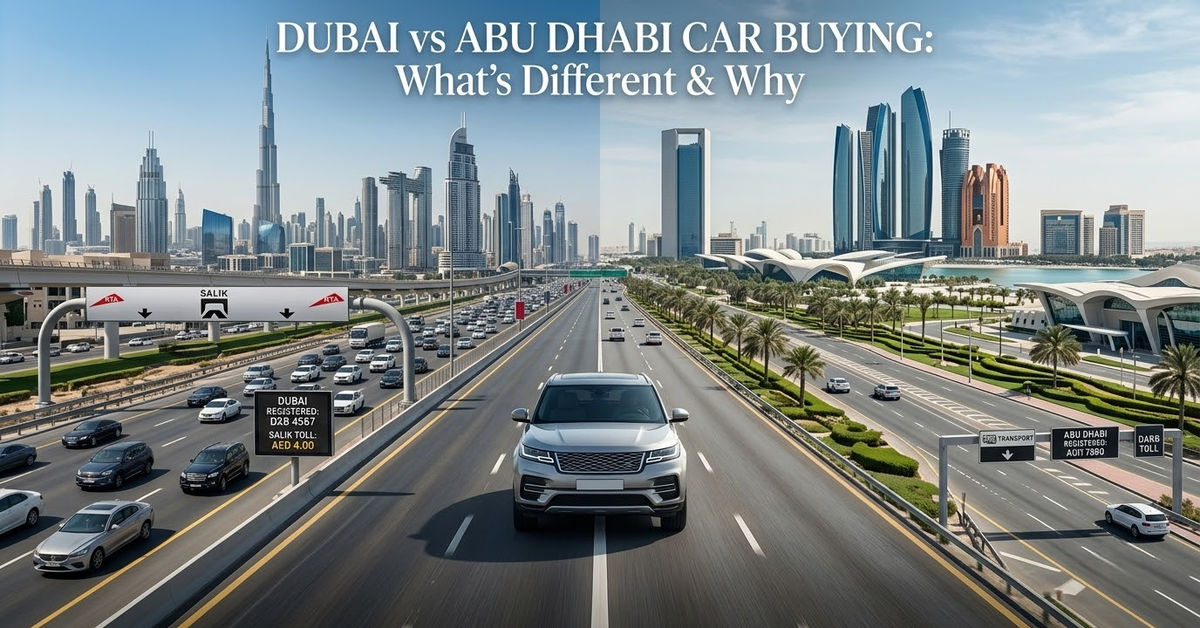
Dubai: It is fair to assume that buying and running a car works the same way across the Emirates. The VAT, federal traffic laws, and registration process are all the same, regardless of whether you register in Dubai or Abu Dhabi. In practice, it does not work that way.
KEY TAKEAWAYS
Does registering a new car cost more in Dubai or Abu Dhabi?
They land close together, both around AED 400 to 455 for a private light vehicle.Can a used car sale be completed fully online in either emirate?
Only in Abu Dhabi, through the TAMM portal. Dubai still requires both parties in person.The reason being both emirates run separate transport authorities and separate toll networks, and in at least one case, a process that Abu Dhabi has quietly moved fully online, while Dubai still asks both buyer and seller to show up in person.
But it's worth knowing that none of these regulatory aspects actually change what a car costs to buy. What changes, though, is how much time, paperwork, and small print a buyer has to sign up for once the deal is done. And it is vital to know the difference before you get the car, not after.
Separate Authorities
Dubai runs its vehicle process through the Roads and Transport Authority, the RTA, a name most residents already know from the metro and Salik. Whereas in Abu Dhabi, this happens under the Department of Municipalities and Transport, working through the TAMM digital portal and, for anyone who prefers doing this in person, the Muroor traffic department.
Both authorities do broadly the same job: registering cars, renewing them annually, and running the inspection network that keeps older vehicles roadworthy. How each one gets there differs more than most buyers expect.
New Registration
A new private light vehicle costs AED 455 to register in Dubai, made up of an AED 400 registration fee, AED 35 for plates, and an AED 20 knowledge and innovation fee.
In Abu Dhabi, new registration for the same category runs AED 400, with dealership-arranged registration on a new car typically bundling this into the purchase, the same way it does in Dubai. Neither emirate requires an inspection on a car under three years old, so a brand-new purchase in either city skips that step entirely.
|
Item |
Dubai |
Abu Dhabi |
|
New registration (light vehicle) |
AED 455 (AED 400 + AED 35 plates + AED 20 fee) |
AED 400 |
|
Renewal (light vehicle) |
AED 290, plus Tasjeel inspection AED 120 to 170 if over 3 years old |
AED 350, plus AED 170 inspection if over 3 years old |
|
Ownership transfer |
AED 350, plus AED 170 inspection if over 3 years old |
AED 350, plus AED 170 inspection if over 3 years old |
|
EV registration incentive |
None confirmed |
15 percent off standard fees, 2026 incentive |
Remember, Abu Dhabi offers a flat 15% EV registration discount, which makes a huge difference worth knowing, since Dubai has no directly comparable fee reduction tied specifically to registration.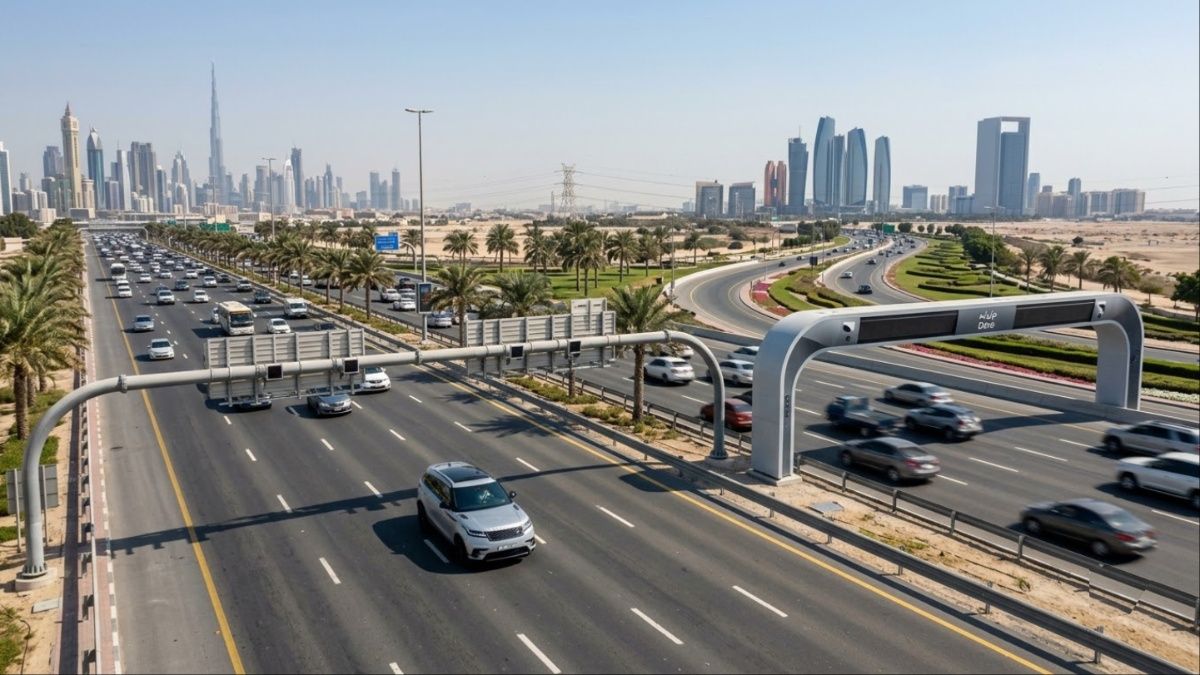
Annual Renewal
This is where the numbers start to diverge slightly, though not by enough to change anyone's buying decision on its own. Dubai's base renewal fee is lower at AED 290 than Abu Dhabi's AED 350, but Dubai adds a mandatory Tasjeel inspection once a car is three years old, costing AED 120 to 170 depending on the centre.
Abu Dhabi's inspection requirement kicks in at the same three-year mark and costs a flat AED 170. Over a five- or six-year ownership period, the total lands close enough together that the renewal fee itself is not a reason to register in one emirate rather than the other.
The Transfer Gap
Here is the detail that actually surprises vehicle owners. Selling or buying a used car in Abu Dhabi can be done entirely online through the TAMM portal using a UAE Pass login, with no visit to a service centre required unless the buyer specifically wants one.
Dubai has not caught up to this level yet. As of mid-2026, the RTA still requires both the buyer and seller to appear in person at an RTA office or an approved testing centre to complete the transfer, even though the rest of the process, from insurance to fine clearance, can be handled digitally.
For a seller trying to close a deal quickly, or a buyer relocating from Abu Dhabi to Dubai mid-purchase, that gap in convenience is real, and it is not a small thing to discover only once the paperwork is already underway.
Tolls
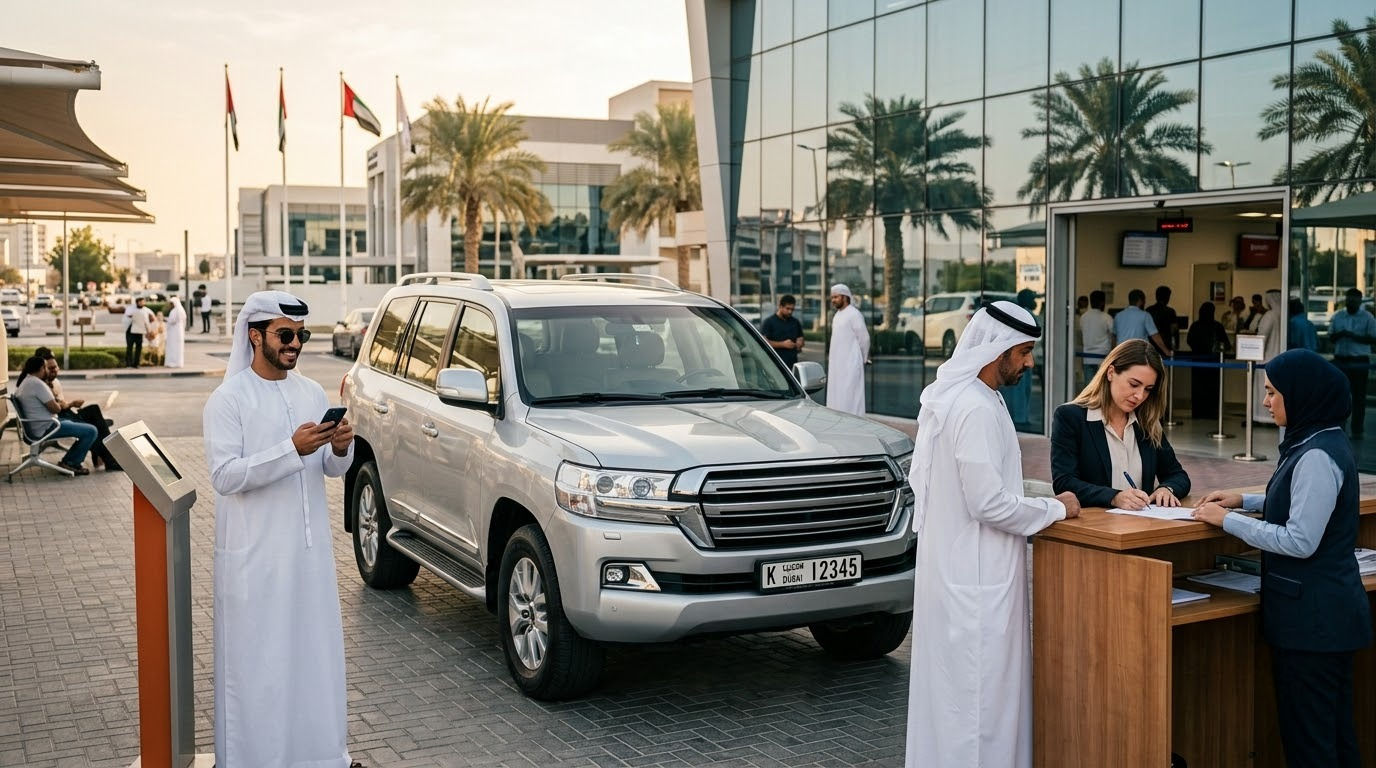
Salik and Darb are distinct systems, and the most common mistake drivers make when moving between the two emirates is treating them as if they are the same.
- Salik in Dubai requires a physical RFID sticker on the windscreen, costing AED 102.5 at a petrol station or AED 122.5 bought online, which includes AED 50 of prepaid credit to start
- Darb in Abu Dhabi needs no sticker or tag at all. It reads number plates directly through overhead cameras, and the driver simply keeps a linked e-wallet funded through the app.
- Salik charges a variable fee: AED 6.30 during peak hours, which are from 6am to 10am and 4pm to 8pm. Salik charges AED 4.20 off-peak from Monday to Saturday, with a flat rate of AED 4.20 all day on Sunday and a free window between 1 am and 6 am.
- Darb charges a flat AED 4 per crossing, though only during weekday peak hours at its four original bridges to Abu Dhabi Island. Two newer gates added in May 2026, Ghantoot and Al Qurm, both on the main Dubai to Abu Dhabi highway corridor, now charge around the clock with no Sunday or overnight exemption.
- Dubai runs 10 active Salik gates spread across the city, concentrated on Sheikh Zayed Road, the main bridges, and the airport tunnel. Darb runs a total of six gates, weighted almost entirely toward controlling access to the island itself rather than general city driving.
A driver doing the daily Dubai to Abu Dhabi commute now needs both accounts funded and running, since the Ghantoot gate specifically sits on that exact route and charges regardless of when you cross it.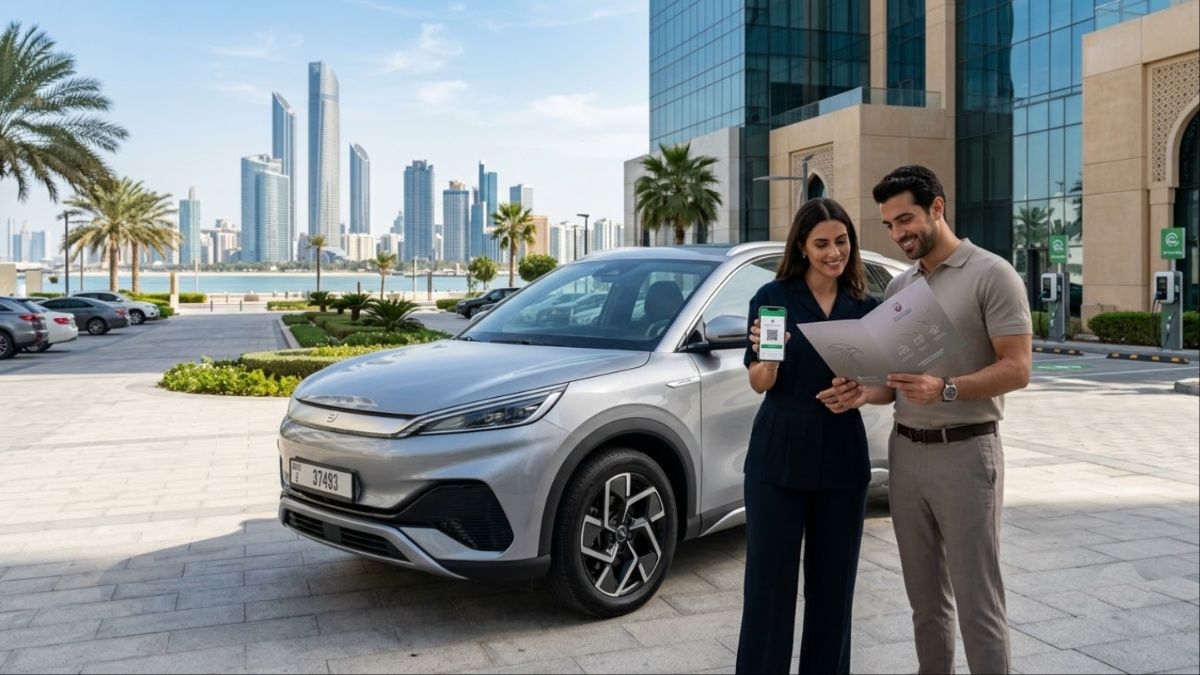
Buying Experience
Dubai simply has more of everything when it comes to physical showrooms. Nearly every brand sold in the UAE keeps a flagship or high-volume dealership somewhere along Sheikh Zayed Road or in one of the city's auto malls, and that density allows Dubai buyers more room to compare variants and negotiate across competing dealers within a short drive.
Abu Dhabi's dealer network is smaller in absolute count, though every major brand is represented, and buyers there sometimes make the drive up to Dubai specifically to see a wider spread of variants before committing, particularly for niche or newly launched brands still building out their Abu Dhabi presence.
None of this changes the actual prices, which are set nationally by each brand's UAE distributor and do not officially vary by emirate. What may change is your ability to negotiate. More competing dealerships in one city tend to mean slightly more flexibility on discounts and accessory packages, simply because a Dubai buyer has more alternatives within reach if one showroom will not budge on price.
What Should You Do
- If you are a buyer who plans to keep a car for years and rarely sells it privately, you will hardly notice any difference between the two systems, as the registration and renewal costs are similar in both cases.
- A buyer who expects to sell privately within the UAE, or who values not having to coordinate two people's schedules for a same-day transfer, gets an easier process for registering in Abu Dhabi.
- If you do regular cross-emirate trips, you need to budget for both Salik and Darb separately, since neither system recognises the other, and the newer Darb gates on the highway corridor no longer offer a free overnight or Sunday window, as the older ones do.
- An EV buyer specifically should check Abu Dhabi's current registration discount before assuming it makes no difference which emirate the car ends up registered in.


The Final Word
Buying a car in the UAE does not change much depending on which emirate a buyer lives in, but running one does, in ways that are only felt after the sale. The only major difference, perhaps, is digitisation. Abu Dhabi has quietly built a more digital-first process around transfers and renewals, while Dubai still leans on in-person steps for the one moment that matters most: actually handing a car from one owner to the next.
The toll systems differ enough in cost, hardware, and timing that treating Salik and Darb as interchangeable is a mistake worth avoiding before the first cross-emirate trip, not after the first unexpected charge appears on your statement.
In reality, nothing of this really changes which car you ultimately choose. But you must know how the ownership impacts you once you are actually driving it.
Also Read: Buying Your First Car in the UAE: What to Sort Out Before You Visit a Showroom
Kiran Bajad

Kiran Bajad, a seasoned automotive journalist, writes with clarity and passion, helping readers make sense of a fast-changing car market. Drawing on years of road experience and a deep understanding of global trends, he turns complex industry shifts into practical guidance for everyday buyers.
Read Full Bio-
Nissan Patrol -
Nissan X-trail -
Nissan Magnite -
Nissan X-terra -
Nissan Kicks -
Nissan Pathfinder -
Nissan Patrol Nismo -
Nissan Altima -
Nissan Urvan -
Nissan Z
- Latest
- Popular





- News
- Featured Stories




- Latest
- Upcoming
- Popular
-
 Alert Me When Launched
 -
 Alert Me When Launched
 -
 Alert Me When Launched
 -
 Alert Me When Launched
 -
 Alert Me When Launched
 -
 Alert Me When Launched
-
 Nissan Urvan29 Apr, 2026 .
 -
 Nissan Patrol Nismo01 Nov, 2025 .
 -
 Nissan X-Trail01 Nov, 2025 .
 -
 All New Nissan KICKS 2025 | Arabic01 Nov, 2025 .
 -
 All New Nissan Z Nismo01 Nov, 2025 .
 -
 NISSAN PATROL CCL01 Nov, 2025 .
 -
 Nissan Magnite Walk Around | Arabic01 Nov, 2025 .
 -
 2017 Nissan 370Z04 Jan, 2018 .
 -
 2017 Nissan Navara Pickup04 Jan, 2018 .
 -
 2017 Nissan GT-R Review04 Jan, 2018 .