Abu Dhabi E311 Speed Limit Reduced To 100km/h: What Drivers Need To Know

Abu Dhabi has reduced the speed limit on a key section of Sheikh Mohammed bin Rashid Al Maktoum Road (E311) from 120km/h down to 100km/h. The new limit became effective on September 14, 2026. This change is particularly important for the thousands of motorists who commute daily between Abu Dhabi and Dubai on one of the country's busiest motorways.
KEY TAKEAWAYS
What is the new speed limit on Abu Dhabi's E311?
The speed limit on the affected E311 section has been reduced from 120km/h to 100km/h, effective September 14, 2026. It applies in both directions.Does Abu Dhabi have a 20km/h speed buffer on the E311?
No. Abu Dhabi does not have a general 20km/h speed buffer. The posted 100km/h limit is the maximum permitted speed.What Is The New Speed Limit On Abu Dhabi’s E311
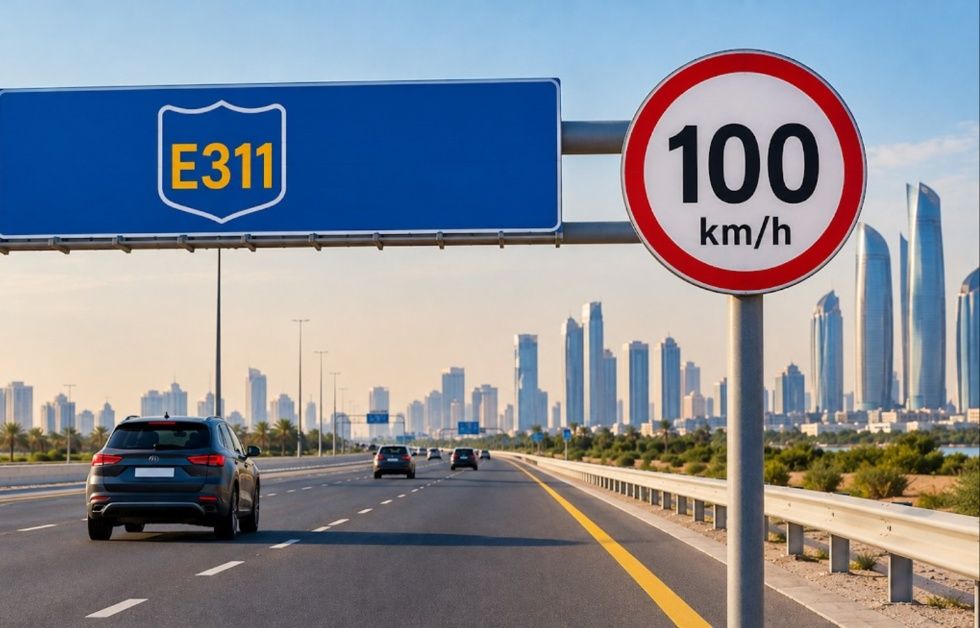
The maximum permitted speed has been lowered by 20km/h. Previously set at 120km/h, the limit is now a firm 100km/h on the affected stretch of the E311 motorway. The change applies to traffic moving in both directions, so it impacts journeys heading towards Abu Dhabi and those travelling towards Dubai.
- Previous limit: 120km/h
- New limit: 100km/h
- Effective from: September 14, 2026
- Road: E311 / Sheikh Mohammed bin Rashid Al Maktoum Road
- Affected section: Tawi Al Qaymah Street to Al Khayr Street
- Applies in both directions
- Applies to traffic travelling towards Abu Dhabi and Dubai
This new limit is in effect specifically on the section of road between Tawi Al Qaymah Street and Al Khayr Street. Drivers should pay close attention to the updated roadside signs, as relying on the old limit is no longer an option.
Does Abu Dhabi Have A 20km/h Speed Buffer
No one needs telling that enforcement practices can differ between emirates. It’s important to remember that Abu Dhabi does not have a general 20km/h speed buffer on its roads. The emirate’s policy of removing the radar buffer was put in place back in 2018.
This means the posted speed limit is the absolute maximum. A sign showing 100km/h means the limit is exactly 100km/h, and a reading of 101km/h is already a violation. Drivers accustomed to the radar thresholds in other emirates should not assume the same system applies here.
|
Road Sign |
What Drivers Should Do |
|
100km/h |
Stay at or below 100km/h |
|
101km/h |
Above the posted speed limit |
|
110km/h |
10km/h above the limit |
|
120km/h |
20km/h above the limit |
What Are The Fines For Exceeding The E311 Speed Limit
Penalties for speeding in Abu Dhabi increase based on how much a driver exceeds the posted limit. For this new 100km/h zone on the E311, the fines are structured quite clearly. Penalties become more severe for speeds more than 60km/h over the limit.
|
Speed Above The Limit |
Fine |
Other Penalties |
|
Up to 20km/h |
AED 300 |
- |
|
21–30km/h |
AED 600 |
- |
|
31–40km/h |
AED 700 |
- |
|
41–50km/h |
AED 1,000 |
- |
|
51–60km/h |
AED 1,500 |
6 black points + 15-day vehicle retention |
For those buying their first car in the UAE, understanding the local driving environment and requirements is equally important.
Why E311 Drivers Need To Pay Attention To The New Limit
The 20km/h reduction is a considerable change for a major commuter route. Regular drivers who are used to setting their cruise control to the old 120km/h limit will need to consciously adjust their habits before entering this section. It isn't a minor tweak.
The best practice is to watch for the new roadside and electronic signs that indicate the start of the 100km/h zone. Relying on memory or even some navigation apps, which may not be updated immediately, could prove costly. The difference in enforcement philosophy between Abu Dhabi and Dubai makes this adjustment all the more necessary.
What The New E311 Speed Limit Means For Drivers
Ultimately, this change requires drivers to be more attentive. The lower speed limit, combined with Abu Dhabi’s zero-tolerance enforcement policy, creates a new reality on this part of the E311. It's a simple change on paper, but one that demands an immediate adjustment in driving behaviour.
For the daily commuter, it means resetting muscle memory and paying closer attention to the speedometer. The days of a 120km/h cruise with a perceived buffer on this section are over. The new 100km/h limit is absolute.
Also Read: Al Habtoor Motors' Back-to-School Offer: Buy a Mitsubishi Now, Start Paying in 2027
- Latest
- Popular








- News
- Featured Stories








- Latest
- Upcoming
- Popular
-
 Mercedes-Benz CLA 2026Price coming soon
 -

-
-
 Chery Tiggo 8 HybridPrice coming soon
 -

-
 Alert Me When Launched
 -
 Land Rover Range Rover SportAlert Me When LaunchedAED 486,483 - 937,038 Expected Price in Abu DhabiExpected Launch Oct, 2026
 -
 Alert Me When Launched
 -
 Alert Me When Launched
 -
 Alert Me When Launched
-

-

-

-
 Mitsubishi PajeroPrice coming soon
 -

-
 Zeekr 9X14 Jul, 2026 .
 -
 Volvo EX9016 May, 2026 .
 -
 Volvo XC9016 May, 2026 .
 -
 DONGFENG Mega15 May, 2026 .
 -
 DONGFENG 00715 May, 2026 .
 -
 Dongfeng Huge15 May, 2026 .
 -
 DONGFENG15 May, 2026 .
 -
 iCaur03T13 May, 2026 .
 -
 2713 May, 2026 .
 -
 chevrolet Corvette Zo611 May, 2026 .