OMODA & JAECOO Tests Super Intelligent Valet Parking in 50°C Dubai Conditions

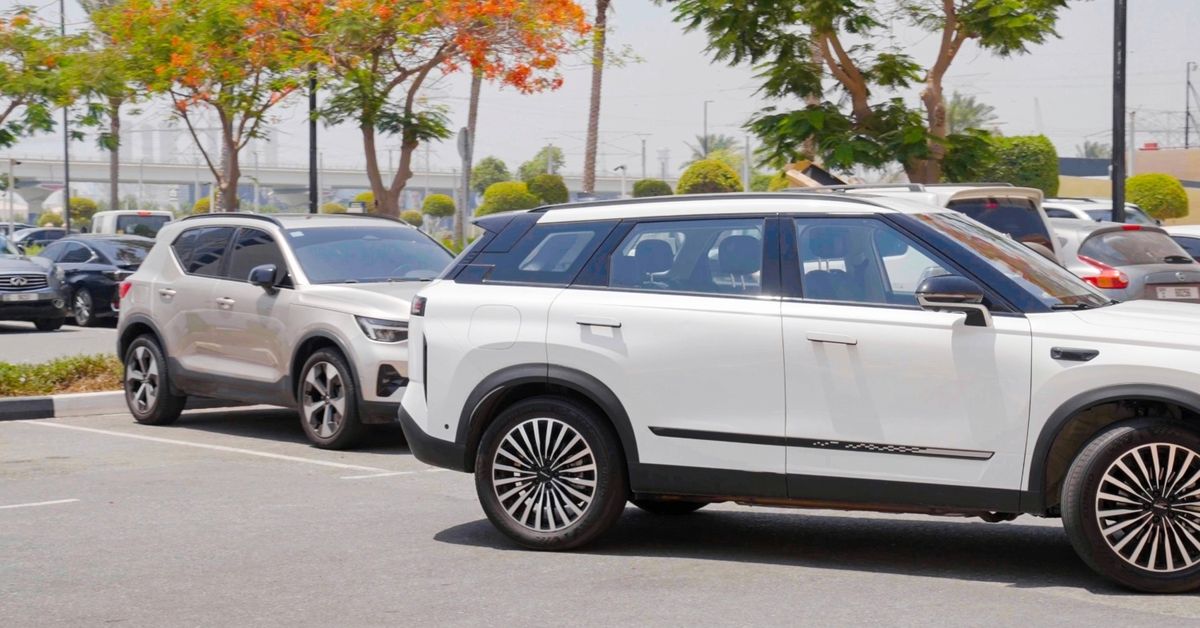
A video circulating across social media, depicting a driverless vehicle executing a flawless parking manoeuvre in the punishing heat of a Dubai summer, which has ignited discussion about the real-world readiness of autonomous technology in the Gulf.
KEY TAKEAWAYS
What is OMODA & JAECOO's Super Intelligent Valet Parking (SIVP)?
Super Intelligent Valet Parking (SIVP) is an advanced autonomous parking system that can detect parking spaces, avoid obstacles and park the vehicle without a driver inside, supporting Level 4 autonomous parking functions in specific environments.Why was the Dubai test significant?
The demonstration took place in temperatures approaching 50°C, putting the vehicle's cameras, radar sensors, processors and thermal management systems through one of the toughest real-world tests for autonomous driving technology.Automotive enthusiasts have speculated that the vehicle belongs to the OMODA & JAECOO family, which is demonstrating the brand's Super Intelligent Valet Parking system under some of the world's most demanding environmental conditions. This unconfirmed test raises critical questions about the rigorous validation required for Level 4 autonomy and the practical timelines for its deployment across the UAE.
Quick read:
- A driverless vehicle, widely believed to be from OMODA & JAECOO, was filmed autonomously parking in Dubai.
- The demonstration took place as ambient temperatures climbed towards 50°C, a crucial stress test for sensors and processors.
- Technology shown is speculated to be the brand's advanced Super Intelligent Valet Parking (SIVP) system.
The Dubai Test Video
Automotive enthusiasts analysed the footage, concluding the vehicle's proportions and lighting signatures align with the OMODA & JAECOO family.
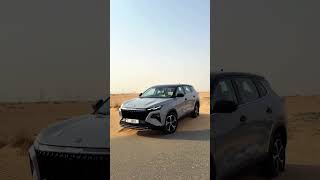
The viral footage, filmed in an outdoor Dubai parking area, shows a vehicle with no one in the driver's seat navigating its surroundings with confidence. It identifies an available space, avoids potential obstacles, and executes a perfect reverse park entirely on its own.
For many in the region, this is not just a technology showcase, it is a direct response to the daily challenge of finding parking in sprawling, sun-baked lots. While OMODA & JAECOO has yet to issue an official statement, the vehicle's distinct design cues have led industry observers to connect the demonstration to the Chinese automaker's recent technology announcements.
Super Intelligent Valet Parking Explained
The brand's SIVP technology was unveiled globally earlier in 2026, described as a system for autonomous parking space detection and self-parking.
The system at the heart of the speculation is OMODA & JAECOO's Super Intelligent Valet Parking. Unveiled globally with the brand's push into advanced intelligent driving, SIVP is engineered to handle the entire parking process. Its capabilities reportedly include autonomous parking space detection, sophisticated obstacle avoidance algorithms and remote vehicle operation.
This moves beyond simple park-assist systems, which require a driver to remain in the vehicle, into a true Level 4 autonomous function for a specific use-case, addressing a significant convenience factor for drivers in the UAE's busy urban centres.
Testing in Extreme Conditions
Industry sources affirm that prolonged exposure to Gulf summer heat provides a uniquely rigorous validation for critical autonomous driving hardware.
Conducting this test as Dubai's temperatures approached 50°C is significant. The UAE's climate is one of the world's most challenging environments for automotive electronics. Critical hardware, including the cameras, radar sensors, onboard processors and battery management systems that underpin any autonomous system, must operate reliably under prolonged exposure to extreme heat.
A successful demonstration in these conditions suggests a high degree of confidence in the system's thermal management and hardware durability, a crucial proof point for any brand planning to deploy advanced driver-assistance systems across the GCC.
What Comes Next
Further technical information about the intelligent driving technology is expected to be announced later in 2026, with localisation testing continuing.
With this apparent real-world test, the focus now shifts from capability to deployment. Sources indicate that further technical details about the technology are expected later in 2026, but the path to the showroom requires more than just functional software.
It raises questions of regulatory frameworks for autonomous systems in the UAE and the readiness of public infrastructure.
- Latest
- Popular







- News
- Featured Stories




- Latest
- Upcoming
- Popular
-
 Toyota Land Cruiser FJPrice coming soon
 -
 Jaecoo J8 SHSPrice coming soon
 -

-
 Skoda KushaqPrice coming soon
 -
-
 Alert Me When Launched
 -
 Alert Me When Launched
 -
 Alert Me When Launched
 -
 Alert Me When Launched
 -
 Alert Me When Launched

-
 Zeekr 9X14 Jul, 2026 .
 -
 Volvo EX9016 May, 2026 .
 -
 Volvo XC9016 May, 2026 .
 -
 DONGFENG Mega15 May, 2026 .
 -
 DONGFENG 00715 May, 2026 .
 -
 Dongfeng Huge15 May, 2026 .
 -
 DONGFENG15 May, 2026 .
 -
 iCaur03T13 May, 2026 .
 -
 2713 May, 2026 .
 -
 chevrolet Corvette Zo611 May, 2026 .