How a Dubai Start-up Is Changing the UAE Car Spare Parts Market

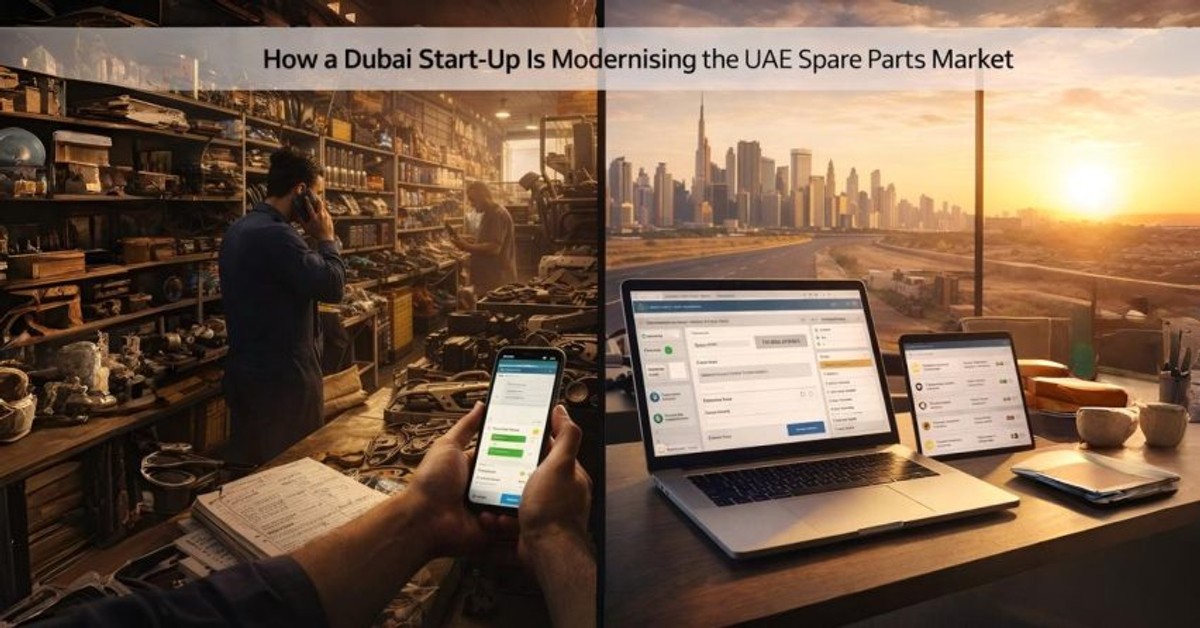
Dubai: The UAE’s spare parts trade has always been fast and relationship-driven. But as cars become more complex, wrong-part orders and delays are rising. Here’s how a Dubai start-up is changing the way parts are sourced and sold.
KEY TAKEAWAYS
What challenges does the UAE car spare parts market face?
The market faces issues with wrong-part orders, unclear conditions, and disputes due to lack of verification and communication.How is Partfinder UAE addressing these challenges?
Partfinder UAE is modernizing the process with VIN-based matching, verified suppliers, and structured enquiries to reduce errors and improve trust.The UAE has one of the busiest spare parts ecosystems in the region. For years, it’s worked on a simple formula: call a trusted seller, visit the market, inspect what’s available, negotiate, and move on.
That system still powers a huge portion of daily repairs. But it’s also under pressure. Modern cars have more variants, more electronics, and less room for guesswork. A part that “looks right” can still be wrong — and that can turn a quick fix into a costly delay.
This is where Dubai’s tech scene is starting to reshape the category. The goal isn’t to replace physical markets. It’s to modernise the process around them — with better verification, clearer enquiries, and fewer wrong-part orders. One platform pushing that change is Partfinder UAE.
How it worked before
Traditional sourcing usually looks like this:
- A workshop or owner calls a few suppliers
- Photos and voice notes are shared on WhatsApp
- Someone checks stock in the market
- A price is agreed quickly
- The part is fitted — and problems are handled later if they come up
When it works, it’s fast. When it doesn’t, it’s usually because important details weren’t confirmed early.
The pain points now
Same model isn’t the same part
Two cars with the same badge can still need different parts due to trim, engine and gearbox variants, mid-year production changes, and GCC vs non-GCC specifications. Electronics make this even more sensitive.
That’s why workshops increasingly see:
- parts that fit but trigger warning lights
- sensors that fail after installation
- modules that don’t communicate correctly
- rework and delays that cost time and labour
Condition isn’t always clear
Disputes often start with unclear definitions. “Genuine”, “used”, “aftermarket (Tijari)”, “refurbished” — those words matter, but informal sourcing doesn’t always label them consistently.
Online risk is rising
More buyers now search online, but many still struggle to confirm who the seller really is, whether stock is real, what happens if the part is wrong, and whether photos match the exact item.
Quoting wastes time
Workshops often send the same request to multiple sellers, repeatedly. Missing VIN details, part numbers, or clear photos lead to slow replies and inaccurate quotes.
What’s changing
The big shift isn’t buying online. It’s buying with verification.
Instead of relying on memory, speed, and trust alone, modern sourcing is increasingly built around proper vehicle identification (especially VIN), clear part requirements upfront, traceable communication and confirmations, seller accountability, and fewer assumptions.
How Partfinder fits in
Partfinder UAE’s impact is mostly about process. It makes sourcing more structured for both sides: buyers get clarity and options, sellers get better enquiries and faster conversion.
Cleaner enquiries
When an enquiry includes proper vehicle details and what’s actually needed, sellers can quote faster and more accurately. This reduces the back-and-forth that slows repairs.
Verified supplier network
One of the biggest issues with random online sourcing is anonymity. A network model built around verified suppliers improves trust and reduces disappear-after-payment fears.
VIN-first matching
VIN is not an extra detail anymore — it’s often essential. Normalising VIN-based sourcing helps reduce wrong-part orders, especially for sensors, electronics, and variant-heavy components.
WhatsApp still works — but with structure
WhatsApp remains the UAE’s fastest channel, and sellers still want to communicate through it. The difference is organisation: enquiries and responses don’t get lost in message threads. Sellers can manage requests through a dashboard across desktop and mobile, including iOS and Android, then contact customers via WhatsApp, SMS, or phone calls.
What buyers get out of it
For owners and workshops, the benefit is simple: less wasted time.
A more structured flow means fewer wrong parts ordered, fewer delays after delivery, clearer condition and expectations upfront, better comparison of offers with context, and more confidence before payment.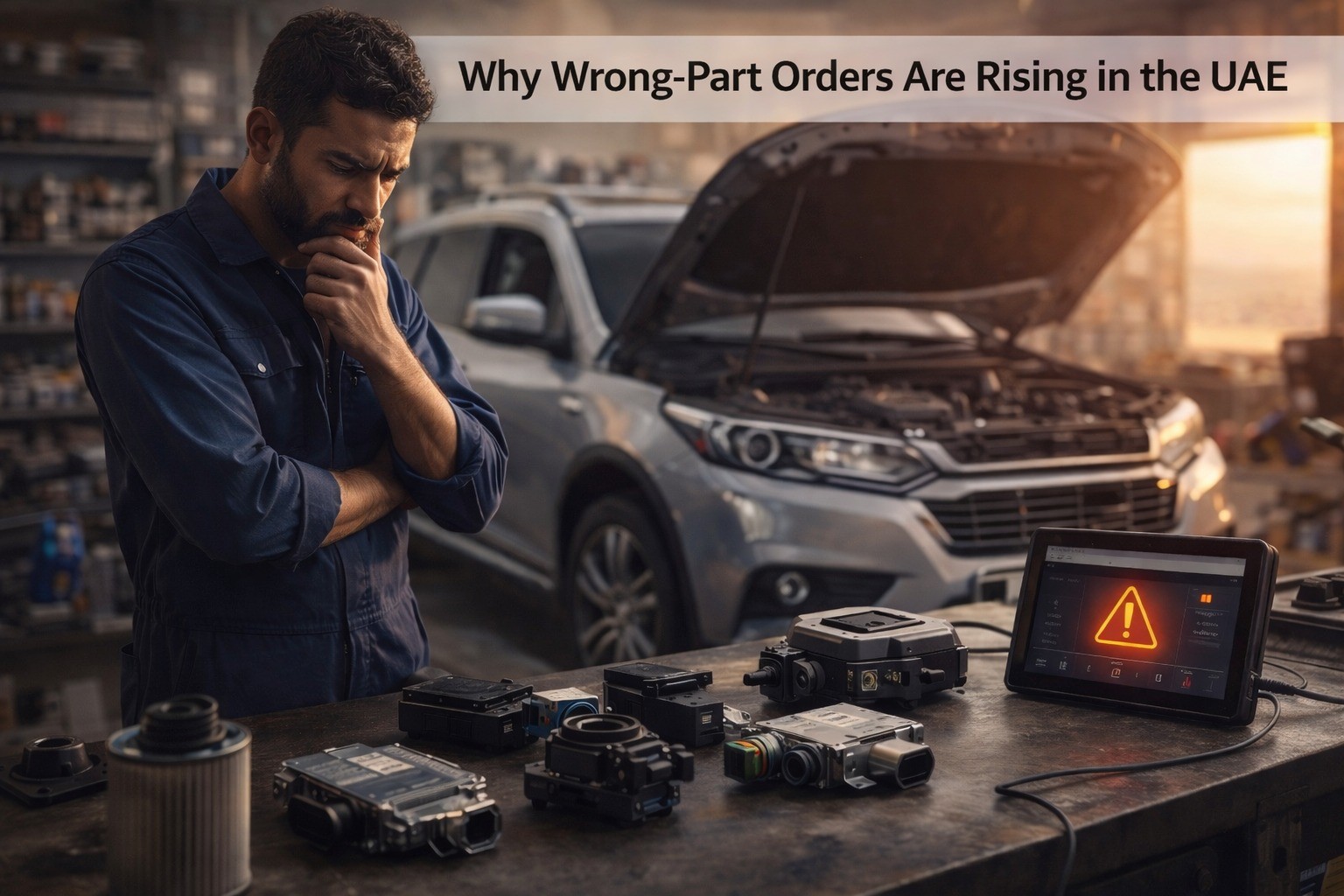
For readers who want to reduce wrong-part orders and compare responses quickly, using a verified spare parts marketplace in the UAE can help confirm compatibility before purchase.
What sellers get out of it
Suppliers benefit when enquiries are better and follow-ups are easier to manage.
That typically means more relevant requests, quicker quoting and response cycles, fewer disputes due to clearer expectations, and expanded reach beyond one physical location. It turns sourcing from waiting for footfall into a more consistent pipeline.
“The spare parts market in the UAE has always been fast — but speed alone isn’t enough anymore. Verification and clear communication are what reduce wrong-part orders and protect both workshops and car owners.”
— Asim Iqbal, Co-Founder, Partfinder UAE
Where the market is going
This won’t be a physical-versus-digital story. The UAE is moving toward a hybrid model: physical markets remain essential for stock and availability, platforms help with discovery, verification, and speed, and logistics and delivery connect supply across Emirates.
For workshops and owners, the winning formula is clear: speed with accuracy. That’s the change Dubai start-ups are driving — and it’s why structured platforms are steadily changing how spare parts are sourced and sold in the UAE.
Editor’s note: This article is for general information. Always confirm fitment using VIN and consult a qualified technician before installation, especially for safety-related parts.
Also Read: Chery Tiggo 9 Super Hybrid: Where Exterior Strength Meets Interior Luxury
Kiran Bajad

Kiran Bajad, a seasoned automotive journalist, writes with clarity and passion, helping readers make sense of a fast-changing car market. Drawing on years of road experience and a deep understanding of global trends, he turns complex industry shifts into practical guidance for everyday buyers.
Read Full Bio-

Mitsubishi Destinator -

Mitsubishi Attrage -

Mitsubishi Pajero -

Mitsubishi Outlander -

Mitsubishi ASX -

Mitsubishi Montero Sport -

Mitsubishi Eclipse Cross -

Mitsubishi Xpander -

Mitsubishi Mirage -

Mitsubishi L200 -

Mitsubishi Xpander Cross
- Latest
- Popular












- News
- Featured Stories






- Latest
- Upcoming
- Popular
-
 Mitsubishi PajeroPrice coming soon
 -

-
 Alert Me When Launched
 -
 Alert Me When Launched
 -
 Alert Me When Launched
-
-

-
Mitsubishi PajeroPrice coming soon
-

-

-

-
 Mitsubishi Attrage05 May, 2026 .
 -
 Mitsubishi Mirage05 May, 2026 .
 -
 Mitsubishi Outlander05 May, 2026 .
 -
 Styled for Adventure05 May, 2026 .
 -
 Mitsubishi Eclipse Cross05 May, 2026 .
 -
 Mitsubishi Montero Sport05 May, 2026 .
 -
 Made for Your Family’s Dream Destinations05 May, 2026 .
 -
 Mitsubishi Xpander Cross05 May, 2026 .
 -
 Mitsubishi L20005 May, 2026 .
 -
 All New Mitsubishi L200 Pickup Walkaround - AR03 Nov, 2025 .