
Audi Q9’s Curved OLED Taillights Explained: What They Mean for UAE Buyers

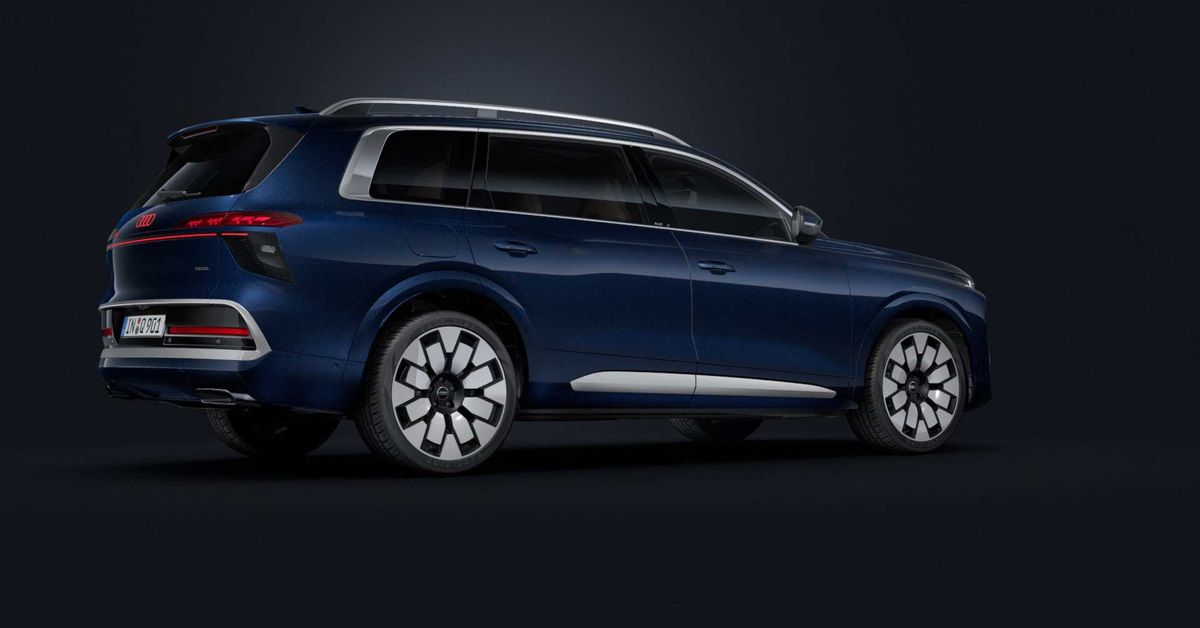
Abu Dhabi: The bigger three-row SUVs are at the top of the luxury market in the UAE, and competition at this level is intense. Most buyers who choose these vehicles expect size, comfort, and technology, and they also don’t mind getting their car noticed. During a busy night on Sheikh Zayed Road or the E11, the first thing you often see of the car ahead is its rear lights. For a long time, this was one area where innovation was mostly limited to design changes.
KEY TAKEAWAYS
What is new about the Q9’s rear lights?
They use curved digital OLED panels, and Audi says this is a first for a production car.Is the Audi Q9 on sale in the UAE?
No, it is not yet on sale. Audi UAE lists it as coming in 2027, but a local price has not been announced.Most brands know this, and lighting has become one of the main ways they set their models apart. We now see many cars with unique and out-of-the-box designs. One recent example is Audi, the German luxury brand, which has made a bold move in this area.
Audi unveiled the new Q9, its largest SUV, on 29 July 2026. On 23 October, it announced more details about the Q9’s rear lighting technology, making it the first production car with a three dimensionally curved digital OLED panel in its rear lights. The Q9 is positioned above the current Q7, which is listed in the UAE from AED 339,900. Audi UAE lists the Q9 as coming in 2027, but a UAE price has not yet been announced.
Here is how the new lights work, what they can do, and what they mean for a UAE buyer who is thinking about the Q9.
OLED In Plain Words
OLED stands for organic light-emitting diode. Unlike conventional lighting systems that use separate light sources behind a lens, an OLED panel produces light across its own surface. Its individual segments can be switched on or off independently. That is how one light can show different shapes and patterns.
Audi has used this technology for years, but its earlier digital OLED panels were flat. The new Q9 panel is curved. The glass substrate is only 0.1 mm thick, and it can bend to a radius of up to 200 mm. As a result, the panel follows the shape of the car’s rear end instead of sitting flat inside it.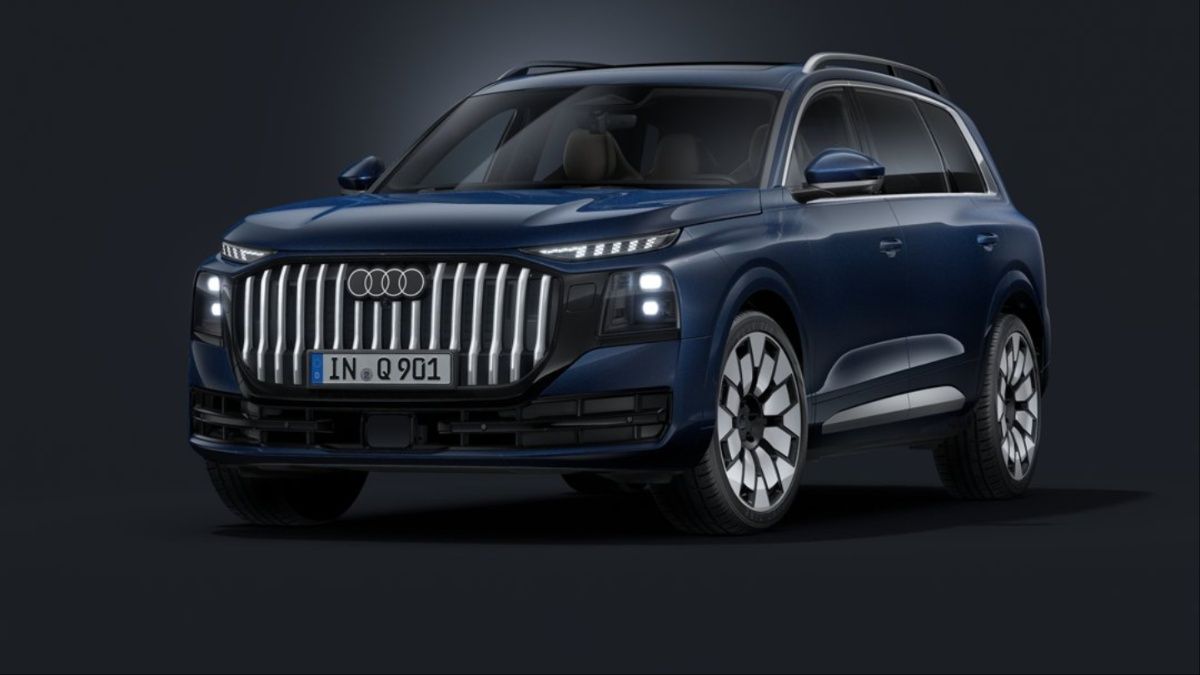
Key Numbers
|
Detail |
Audi Q9 rear lights |
|
Technology |
Third generation digital OLED |
|
Glass thickness |
0.1 mm |
|
Bend radius |
Up to 200 mm |
|
Segments |
512 |
|
Large panels |
6 |
|
Largest curved panel |
99 segments |
|
Other large panels |
84 and 73 segments |
|
Light signatures |
Up to 8 at the front and rear |
Why The Curve Matters
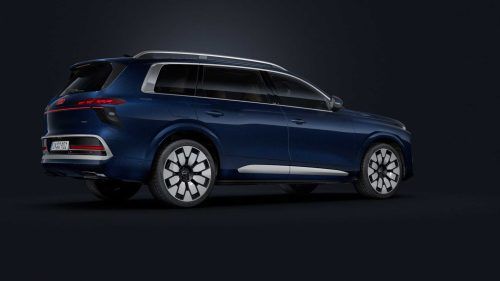
Clearly, the curve is not only about looks. Audi has placed the curved OLED panels in the outer areas of the rear lights, so they can be seen from wider angles at the side of the car. Audi says this improves road safety because a driver approaching from the side can see the lights more easily than with a flat panel.
That matters in the UAE, where wide junctions, fast roundabouts, and heavy traffic on Al Khail Road, Emirates Road, and the E311 are part of daily life. A car that can be seen more clearly from the side gives other road users an additional visual warning.
Light Signatures
Owners can choose from up to eight digital light signatures at the front and rear. They can be static, fully active, or semi-active. Semi-active signatures are new in this generation, creating three-dimensional effects that stand out at night.
The lights can also communicate with other drivers. A communication light can display warning symbols in the rear lights to alert road users to an accident or breakdown ahead. The system also has a connected exit warning that can alert approaching cyclists or vehicles when someone is about to open a door.
An advanced turn signal, previously introduced on the Audi Q7, projects a stylised arrow onto the road when you turn or change lanes at night.
The front of the car gets equal attention. Audi’s Digital Matrix LED headlights use a micro LED module with 25,600 individual micro LEDs in a space about 13 mm wide.
A Short History
Audi has developed this technology in stages, and it helps to see how far it has come.
- 2016: The Audi TT RS carried the first production OLED rear light.
- 2020: The Q5 and A8 brought the first generation of digital OLED technology.
- 2024: The second generation increased the number of individually controlled segments tenfold, appearing on the Q6 e-tron, A5, A6, A6 e-tron, and Q5 model lines.
- 2026: The third generation arrives on the Q9 and Q7 model lines, while the curved design remains exclusive to the Q9.
For a UAE buyer, that last point is worth noting. The new Q7 also gets third-generation digital OLED rear lights, but the curved panel is exclusive to the Q9.
The Car Itself
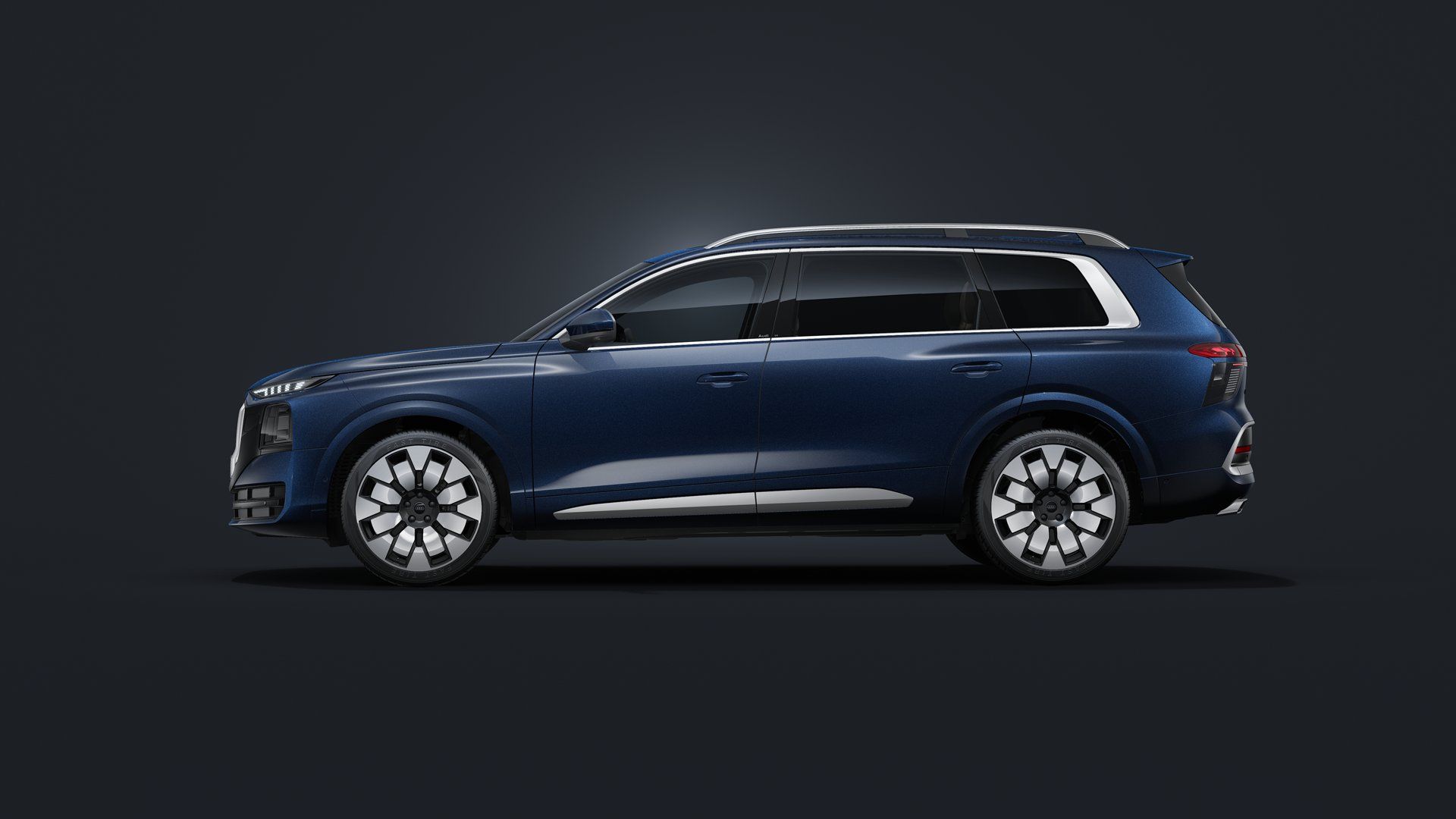
The lights are only one part of a very big car. The Q9 measures approximately 5,310 mm in length, 2,210 mm in width, and 1,810 mm in height, with a wheelbase of 3,140 mm. It has seven seats as standard, while a six-seat layout with individual second-row seats is available.
As one might expect in this premium luxury SUV, the cabin is another highlight. Inside, there is a 12.3-inch driver display, a 14.5-inch central screen, and a 12.3-inch screen for the front passenger. The sound system has 22 speakers from Bang & Olufsen. Other equipment includes five-zone climate control, a large panoramic sunroof, USB-C charging across all three rows, and wheels of up to 23 inches.
Audi also offers advanced driver assistance systems, including adaptive driving assistance. However, the hands-free driving function at speeds of up to 130 km/h is initially restricted to Germany, the US, and Canada, so its availability in the UAE needs confirmation.
As far as the powertrain goes, Audi’s UAE website describes the Q9 with a V6 engine and lists a maximum power of up to 320 kW, with a 0 to 100 km/h time of 4.9 seconds. The exact UAE engine specification and variant details should be confirmed closer to the local launch.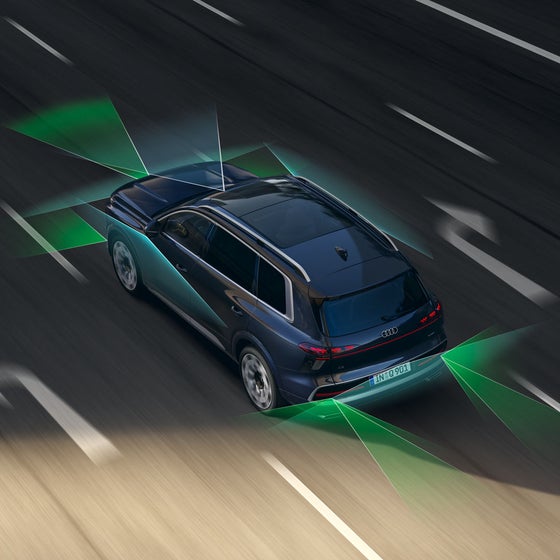
What To Expect Here
Audi has not yet announced a specific UAE showroom launch date, but Audi UAE lists the Q9 as coming in 2027. Until then, the current Q7 remains the available option, with prices starting from AED 339,900.
The current Q7 is an established choice in the luxury SUV segment, but the new Q9 brings a bigger body, a more spacious cabin, and newer technology. The new Q7 will also get third-generation digital OLED rear lights, although without the Q9’s curved panels.
What It Means
It goes without saying that the Emirati luxury market appreciates a visible statement, and the Q9’s lights are exactly that. Audi is using them to tell buyers that its biggest SUV is also one of its most technologically advanced. The curved panel is a neat answer to a simple problem: how to make a rear light stand out from wider viewing angles.
But frankly, for most buyers, the lights will be a bonus and not the reason to choose the car. Size, comfort, running costs, and price will decide the purchase, and Audi has yet to announce the Q9’s UAE price. What the lights do show is how far the brand is willing to push technology across its range, from the Q9 to the new Q7.
Also Read: Beyond the AVATR 11: Which Electric SUV Suits Your Priorities
Kiran Bajad

Kiran Bajad, a seasoned automotive journalist, writes with clarity and passion, helping readers make sense of a fast-changing car market. Drawing on years of road experience and a deep understanding of global trends, he turns complex industry shifts into practical guidance for everyday buyers.
Read Full Bio
-

Audi RS3 -

Audi E-tron Sportback -

Audi A7 -

Audi Q5 -
Audi A3 -

Audi Q2 -

Audi R8 Spyder -

Audi S3 -

Audi Q3 2026 -

Audi A8 -

Audi A6 -

Audi RS7 Sportback
- Latest
- Popular





- News
- Featured Stories



- Latest
- Upcoming
- Popular
-
 Toyota CenturyPrice coming soon
-
 Hyundai InsterPrice coming soon
-
-
-
 Ford EverestPrice coming soon
-
 Alert Me When Launched
-
 Alert Me When Launched
-
 Alert Me When Launched
-
 Alert Me When Launched
-
 Alert Me When Launched
- Latest
- Upcoming
- Popular
-
Toyota CenturyPrice coming soon
-
Hyundai InsterPrice coming soon
-
-
-
Ford EverestPrice coming soon
-
-
Alert Me When Launched
-
Alert Me When Launched
-
Alert Me When Launched
-
 Alert Me When Launched
-
 Alert Me When Launched
-
 Alert Me When Launched

- Brand
- Model
- Variant

-
 Link your google account
-
 Link your facebook account