Abu Dhabi Testing Smart Traffic Signals

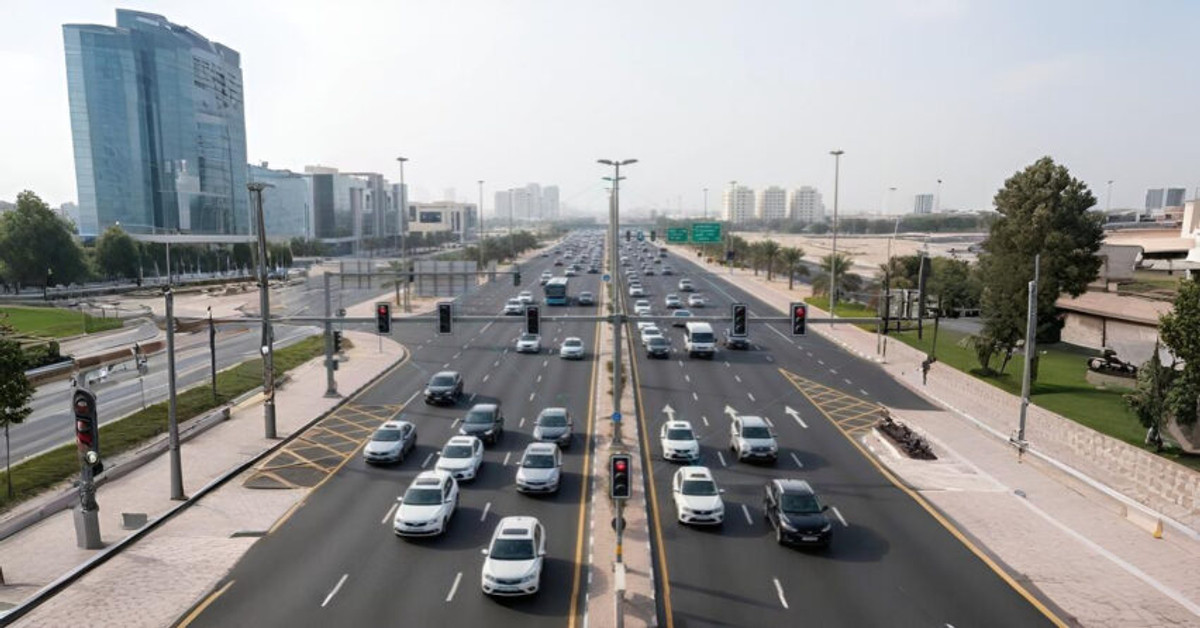
Abu Dhabi has taken a bold initiative by introducing AI-powered smart traffic signals in the fast-growing city to tackle congestion and enhance safety. After the Salik, which was an electronic toll system. The integrated transportation centre was launched in September 2025 at seven entry points on Sheikh Zayed bin Sultan Street, including Shakhbout bin Sultan Street and Al Dhafra Street. Within a short period, it turns out the system is quite effective, especially in dynamically adjusting signal timings based on the number of vehicles on the road, which helps reduce greens during peaks and extend them when lighter.
KEY TAKEAWAYS
How do Abu Dhabi's smart traffic signals work?
AI-powered cameras and sensors watch how many cars are on the road and change the traffic light timings automatically to keep traffic moving smoothly.Where are the smart signals currently operating?
Seven entry points to Sheikh Zayed bin Sultan Street, including Shakhbout, Dhafeer, and Rabdan Streets.By implementing this new advanced system, the city authorities want to achieve several key objectives. Primarily, make the road safer, boost the city’s sustainability credentials, and improve the commuter experience even as the city continues to grow rapidly. If early results are any indication, it is encouraging to see there has been significant superior vehicle fluidity and lower emissions through precise flow management. This further helps in linking to autonomous vehicle networks, allowing predictive traffic management for resilient urban mobility. If early results are any indication, then there is clearly visibility for improved vehicle flow and lower emissions through accurate flow management.
Smart Signal Locations (September 2025)
|
Entry Point |
Direction |
Traffic Volume |
Peak Hours |
Status |
|
Shakhbout bin Sultan Street |
Both |
Very High |
7-9 AM, 5-7 PM |
Active |
|
Dhafeer Street |
Both |
High |
7-9 AM, 4-6 PM |
Active |
|
Hadbat Al Ghubainah Street |
Outbound |
Medium-High |
5-7 PM |
Active |
|
Salama bint Butti Street |
Inbound |
High |
7-9 AM |
Active |
|
Al Dhafra Street |
Inbound |
Medium |
7-8 AM |
Active |
|
Rabdan Street |
Inbound |
High |
7-9 AM |
Active |
|
Umm Yifina Street |
Inbound |
Medium-High |
7-9 AM |
Active |
The Ramp Metering Concept
This concept is now entirely new in the world, as many top cities, like Los Angeles, London, and Singapore, have used the ramp metering system for years. Abu Dhabi is among the first in the Middle East to deploy it with AI-driven adaptability.
Here the sensors are embedded in the road to measure traffic density on Sheikh Zayed Street. These AI cameras are smart enough to monitor vehicle flow at entry points, and when the density increases above certain thresholds, traffic signals at entry ramps activate to help with the administration of the UAE Driving Rule Updates in 2026, too. The system works in a way that it meters the number of vehicles entering the main road and then allows one or two cars per signal cycle instead of continuous flow.
This approach avoids the “accordion effect", where a large number of vehicles enter at the same time, creating stop-and-go patterns downstream. So basically by having a control on the entry, the main road maintains higher average speeds. While drivers on entry ramps wait longer, everyone on the main road moves faster, without any congestion, improving average speed and flow.
The good part is the system only activates when needed. So when it is non-peak time, Sheikh Zayed Street flows freely, and entry signals remain green. All of this is done by the technology, as AI determines activation timing based on real-time conditions, not fixed schedules.
What Drivers Actually Experience
Gauging by the early feedback, it looks like the response is overall mixed. This is not a bad thing. It is observed that during peak hours the flow has improved while travelling on Sheikh Zayed Street. It is now clear that the road does not get heavily congested between 7 and 9 AM, and during the evening heavy traffic hour from 5 to 7 PM, it moves more consistently.
However, those cars entering from ramp-metered streets face some delays. A journey from Shakhbout Street onto Sheikh Zayed now includes a 2-3 minute wait at the entry signal during morning peak. This was not the case before September.
If you are driving through that route every day, you could end up losing 10-15 minutes weekly. But with that, you actually help avoid worse delays for 20-30 vehicles behind you. By sacrificing personal time, you are helping for collective benefit.
Additionally, the traffic authorities will not explain the reason for your wait. The signal just stays red without any countdown timer or any message explaining peak congestion triggered metering. You sit there assuming it's a regular light malfunction.
Forecasting Tech Layer
What Abu Dhabi's smart signals are trying to do is go beyond reactive adjustments. The Integrated Transport Centre has put in place predictive AI that analyses historical traffic patterns, and this works well for it to get its data correct by anticipating congestion before it occurs based on the day of the week, time of day, weather, and special events.
We all know every Tuesday morning, historically, traffic becomes worse, and the system preemptively activates earlier. Similarly, before holiday weekends when traffic increases, the thresholds adjust. The system takes into account anomalous traffic flows following F1 Grand Prix events at Yas Island.
This predictive capability makes Abu Dhabi's implementation different from basic ramp metering. The AI does not only just respond; it actually predicts and prepares.
Most predictions need accurate data, and the system learns from observed patterns. In a city growing as rapidly as Abu Dhabi, past patterns might not predict tomorrow's reality. New residential developments, office buildings, and retail centres change traffic flows constantly. The AI must adapt quickly.
Holistic System Integration
Interestingly, Abu Dhabi's smart signals connect to extensive traffic management networks. What they end up doing is sharing data with accident response platforms, enabling emergency services to adjust and plan routes. They also link to citywide signal control systems, allowing coordinated timing across multiple intersections of the city.
For example, at the December 2025 F1 Grand Prix, ITC deployed the system alongside AI drones monitoring traffic and 15 autonomous vehicles managing crowd flow. The smart signals changed to make room for more traffic to Yas Island. This integration proved the system's flexibility and ease of management.
The greater strategy comprises enhancing coverage beyond seven entry points. While there are no specific deadlines, it is possible to add more locations, as the infrastructure already exists. Sheikh Zayed Street has additional entry points currently operating with standard signals, and retrofitting them with ramp metering is easy and simple.
While there are several benefits, the whole system is not cheap; it costs a considerable amount of financial commitment.
The Expansion Question
The decision to expand this system beyond the existing seven locations will depend on the early success of the current trial, which will influence future expansion plans. If the goal of decongesting Sheikh Zayed Street gets good results and accident rates drop, ITC will expand to other arterial roads. Potential candidates include Salam Street, Muroor Road, and Airport Road.
The necessary financial support will also be included in the upcoming budget. These smart signals compete with other infrastructure priorities: road widening projects, public transport expansion, and pedestrian facilities. And it all depends on how much traffic management technology is against physical infrastructure improvements.
Curiously enough, whatever happens in Abu Dhabi, Dubai is watching closely. RTA announced its own next-generation traffic signal system, UTC-UX Fusion, in February 2025, getting AI and digital twin technology. If Abu Dhabi's ramp metering succeeds, Dubai might implement similar systems.
Conclusion
It is worth noting that Abu Dhabi's smart traffic signals highlight the city’s tech-forward approach in tackling some of the most complex issues. These challenges are faced by a larger population as the city continues to grow rapidly, leading to various issues, particularly those related to the increasing number of vehicles. Taking help of advanced tech like AI to control vehicle entry onto Sheikh Zayed Street at seven locations since September 2025, there certainly are many benefits in some of the key objectives. Its early success and expansion depend on measurable results justifying the AED 14–28 million investment.
Kiran Bajad

Kiran Bajad, a seasoned automotive journalist, writes with clarity and passion, helping readers make sense of a fast-changing car market. Drawing on years of road experience and a deep understanding of global trends, he turns complex industry shifts into practical guidance for everyday buyers.
Read Full Bio-
Nissan Patrol -
Nissan X-trail -
Nissan Magnite -

Nissan X-terra -
Nissan Kicks -
Nissan Pathfinder -
Nissan Altima -

Nissan Patrol Nismo -
Nissan Urvan -
Nissan Z
- Latest
- Popular






- News
- Featured Stories





- Latest
- Upcoming
- Popular
-
 Alert Me When Launched
 -
 Alert Me When Launched
 -
 Alert Me When Launched
 -
 Alert Me When Launched
 -
 Alert Me When Launched
 -
 Alert Me When Launched

-
 Nissan Urvan29 Apr, 2026 .
 -
 Nissan Patrol Nismo01 Nov, 2025 .
 -
 Nissan X-Trail01 Nov, 2025 .
 -
 All New Nissan KICKS 2025 | Arabic01 Nov, 2025 .
 -
 All New Nissan Z Nismo01 Nov, 2025 .
 -
 NISSAN PATROL CCL01 Nov, 2025 .
 -
 Nissan Magnite Walk Around | Arabic01 Nov, 2025 .
 -
 2017 Nissan 370Z04 Jan, 2018 .
 -
 2017 Nissan Navara Pickup04 Jan, 2018 .
 -
 2017 Nissan GT-R Review04 Jan, 2018 .