UAE Scrap Car Policy in 2026: Why Old Cars Are Legal but Rare

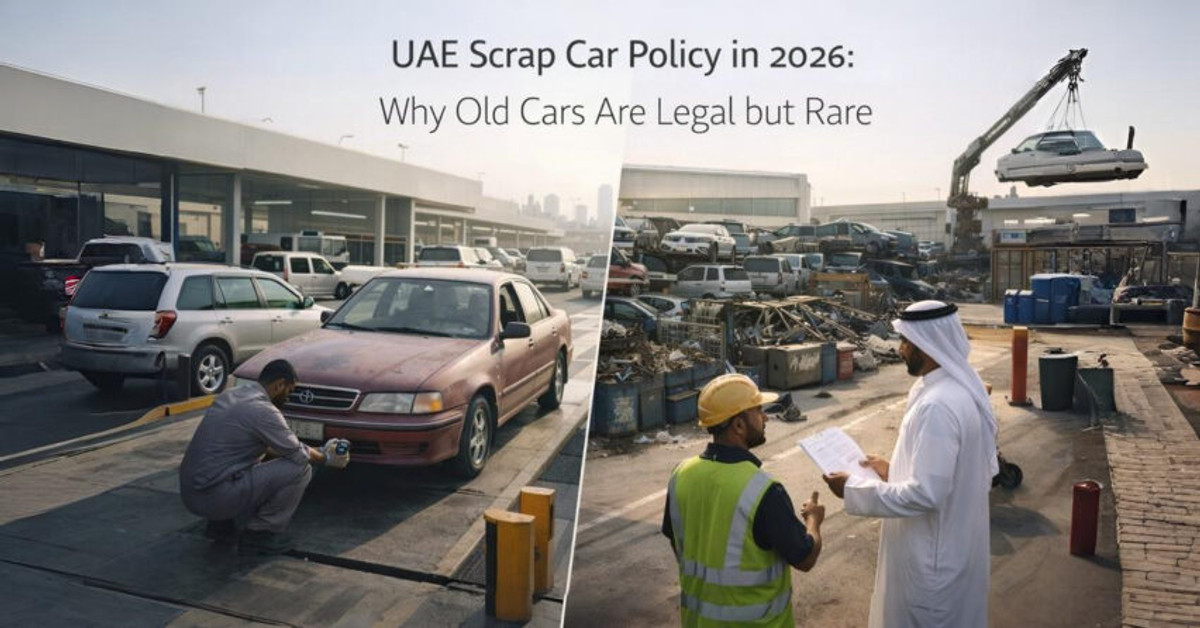
Contrary to the assumption of most automotive industry observers, the UAE does not have a mandatory vehicle scrapping policy. In reality, this is not the case. There is no legal rule that automatically bans cars once they cross a certain number of years. There was a proposed 20‑year age limit explored in the late 2000s, but it was later put on hold, essentially allowing vehicles of any age to remain on the road as long as they pass annual inspections. This rule allows owners flexibility and protects lower‑income motorists if they maintain their vehicles and keep them safe to drive.
KEY TAKEAWAYS
Is there a mandatory vehicle age limit in the UAE?
No mandatory age limit exists. Vehicles must pass annual technical inspections regardless of age.What documents do you need to scrap a car in the UAE?
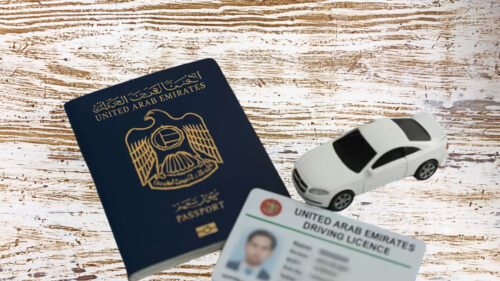
Original registration card, Emirates ID, Dubai Police clearance certificate, insurance cancellation proof, cleared fines.However, from a more practical aspect, keeping an old car running becomes increasingly difficult. Owners encounter some basic hassles like sourcing spare parts, increasing maintenance expenses, high insurance premiums, and resale collapse. Even though the government allows older vehicles, economic reality quietly pushes most owners toward scrapping or replacement long before the law requires it. We take a closer look at all the aspects of vehicle scrapping in the UAE.
Vehicle Age and Practical Constraints
|
Vehicle Age |
Registration Status |
Insurance Premium |
Parts Availability |
Resale Value |
Practical Outcome |
|
0-5 years |
Standard renewal |
Standard rates |
Readily available |
60-70% of new |
Normal ownership |
|
6-10 years |
Standard renewal |
+15-25% premium |
Available |
35-50% of new |
Transfer restricted after 10 years |
|
11-15 years |
Annual inspection required |
+30-50% premium |
Difficult |
20-30% of new |
Limited buyers |
|
16-20 years |
Strict annual inspection |
+60-100% premium |
Very difficult |
10-15% of new |
Export or scrap consideration |
|
21+ years |
Possible if passes inspection |
Often refused |
Nearly impossible |
Sub-AED 5,000 |
Economically unviable |
The Inspection Reality
In the UAE, all vehicles running on the road over 15 years old face stricter annual technical inspections at RTA testing centres in Dubai or equivalent facilities in other emirates. Vehicles get rigorously tested on several parameters, making them highly tough, including:
- Emission levels meeting current standards, with CO under 2.5% and HC under 300 ppm
- The brake system usage and pad thickness
- Quality of suspension components and bushings
- A robust steering system play and alignment
- Quality of tyre tread depth: minimum 1.6 mm
- Lights, indicators, and electrical systems
- The body rust and structural strength
- Safety equipment, including seatbelts and airbags
A 20‑year‑old vehicle with original components most likely has multiple failed items. Fixing these issues to pass inspection costs AED 3,000–8,000, but this cost also depends on the availability of parts and other critical components, which are not easy to find. At that point, owners face a calculation: spend AED 5,000 fixing a car worth AED 8,000, or scrap it for AED 1,500–3,000 and move on. The inspection system doesn’t ban old cars arbitrarily; in a way, it makes keeping them expensive enough that most owners choose scrapping.
The Transfer Restriction That Matters
The law prohibits transferring ownership of vehicles over 10 years old. You can renew registration in your name for as long as you wish after passing the inspections, but it is not possible to sell it to another buyer.
This basically drops the resale value, and a well‑maintained car may be mechanically great, but as per law, it cannot be sold within the UAE, even in the Saudi Arabia Used Car market. The only options are:
Export: This is one option wherein you can ship the car to markets accepting older vehicles, like Pakistan, Iraq, or Afghanistan. But there is a cost to this; export especially costs AED 2,000–4,000 plus shipping. It works only if the car’s value in the destination market exceeds these costs.
Scrap: Sell to licensed scrap dealers for metal value, and the prices range from AED 1,000 to 5,000 depending on vehicle size and metal prices. Compact sedans get AED 1,500–2,500, while large SUVs might bring AED 3,000–5,000.
Keep it: Continue using the vehicle yourself until it fails inspection or becomes too expensive to maintain.
As per the 10‑year transfer restriction, the law is not stopping you from owning old cars. It stops you from selling them. That’s a critical distinction affecting resale value from the first year of ownership.
The Deregistration Process
But if you decide to scrap your car, you need to deregister it, which can be done through Dubai RTA, the Abu Dhabi Police Vehicle and Drivers Licensing Department, or the Ministry of Interior Centres in the Northern Emirates. This process takes 2–3 working days. There are several steps involved.
Clear all fines. If there is any outstanding fine against your car, you need to clear that off. This can be verified by the MOI UAE app, the RTA website, or the TAMM portal. You must do everything; no matter how small the amount is, you need a clean slate against your car.
Cancel insurance. If there is running insurance, you must cancel and produce a document that confirms it.
Police clearance: Get a clearance from the Dubai Police Traffic Department or the equivalent in your residence emirate. This costs AED 100–200, depending on the emirate.
Submit the deregistration application: The most important step of the process is the final one, where you have to file all original documents, including the original registration card, Emirates ID, police clearance, and insurance cancellation whether it is Comprehensive vs Third-Party Insurance. After that, you need to pay the deregistration fees with the necessary fees, which are around AED 100–250. Once everything is done, the deregistration certificate should come in 2–3 working days.
Scrap through a licensed dealer. Once all your paperwork is successful, you can go ahead and scrap the car. Only authorised scrapyards can legally dismantle vehicles. Unlicensed operators exist, but using them creates liability issues if the car is later involved in incidents.
The Environmental Compliance
To make sure the vehicles are scrapped properly with all the necessary processes, there are GCC standards in place that require licensed scrap facilities to be equipped with the following:
- Drain all fluids – oil, coolant, fuel – for proper disposal
- Removing and recycling batteries through approved channels
- Compulsory to achieve a minimum 89% metal recovery rate
- Handling hazardous materials according to environmental regulations
Highly recognised and reputable scrap dealers like Scrap My Car UAE, Car Scrap AE, and others offer scrapping certificates proving environmental compliance. This is relevant for record‑keeping and confirms you’re no longer liable for the vehicle.
Whereas unorganised scrap dealers promise cash without documentation most of the time, this sounds quick and hassle‑free at the moment. But this may cause trouble in the future. For example, if that scrapped car’s VIN appears in an incident months later, authorities can easily trace it back to the original owners.
What Licensed Dealers Actually Pay
Scrap prices in 2026 depend on global metal markets and vehicle weight:
Compact sedans: These cars may get you in the range of AED 1,500-2,500 The average weight of these vehicles ranges from 1,100 to 1,300 kg, and the metal content is around 850-1,000 kg after fluids and non-metal components are removed.
Mid-size sedans: Here you can expect between AED 2,000 and 3,500, 1,400-1,600 kg. With metal recovery of around 1,100-1,250 kg.
Large sedans: Between AED 2,500 and 4,000. These cars weigh 1,800-2,100 kg. And the metal recovery: 1,400-1,650 kg.
SUVs: Since these are bigger ones, they can fetch AED 3,000-5,000, with a weight of 2,200-2,800 kg, with metal recovery: 1,700-2,200 kg.
These are scrap metal values, not vehicle values, because the condition of the car does not really matter much. Even a most well‑maintained, 20‑year‑old Land Cruiser brings similar scrap prices to a wrecked one because dealers are buying metal weight, not drivability.
The Economics Nobody Discusses
Does it really make sense to keep a car beyond 20 years old? If you look at the economics, it is pretty clear. Here is what the calculator of a 15-year-old vehicle looks like.
Annual costs
- Insurance: AED 2,500 (50% premium over newer cars)
- Inspection: AED 200
- Repairs to pass inspection: AED 2,000-5,000 average
- Registration renewal: AED 500
- Higher fuel consumption: +15-20% vs newer equivalent
- Total: AED 5,200-8,200 annually
Resale value: AED 8,000-15,000 depending on model
Scrap value: AED 2,000-4,000
So the decision is obvious: if you wish to keep the car for one more year, you end up spending AED 6,000 in additional costs and, along the way, reduce net value. If you scrap now, it will fetch AED 3,000, and you can redirect those costs toward a newer vehicle with lower operating expenses.
Clearly, the financial calculations encourage most vehicle owners to scrap their vehicles before they reach 18–20 years of age, regardless of any legal restrictions.
Conclusion
The UAE has no mandatory vehicle age limit in 2026 following the indefinite postponement of the proposed 20‑year ban. However, practical constraints necessitate the scrapping of most vehicles that are over 15 to 18 years old, which also makes economic sense. The 10‑year transfer restriction kills resale value, and, along with stringent inspections and higher insurance premiums, it makes old car ownership expensive. Driving an older car is also not always safer, so beyond the financial aspect, it is better to part ways with it and get a new one.
Kiran Bajad

Kiran Bajad, a seasoned automotive journalist, writes with clarity and passion, helping readers make sense of a fast-changing car market. Drawing on years of road experience and a deep understanding of global trends, he turns complex industry shifts into practical guidance for everyday buyers.
Read Full Bio-
Toyota Fortuner -
Toyota RAV 4 2026 -
Toyota Land Cruiser -
Toyota Corolla -
Toyota Land Cruiser Prado -
Toyota Urban Cruiser -
Toyota Yaris Sedan -
Toyota Raize -

Toyota Supra -
Toyota Corolla Cross -
Toyota Veloz -
Toyota Hilux
- Latest
- Popular








- News
- Featured Stories



- Latest
- Upcoming
- Popular
-
 Toyota Land Cruiser FJPrice coming soon
 -
 Toyota TundraPrice coming soon
 -

-
-
-

-
 Alert Me When Launched
 -
 Alert Me When Launched
 -
 Alert Me When Launched
 -
 Alert Me When Launched
 -
 Alert Me When Launched
 -
 Alert Me When Launched
-
 Toyota Granvia30 Apr, 2026 .
 -
 Toyota Liteace30 Apr, 2026 .
 -
 Toyota Veloz30 Apr, 2026 .
 -
 Toyota Highlander30 Apr, 2026 .
 -
 Toyota Supra30 Apr, 2026 .
 -
 Toyota GR Corolla Overview12 Mar, 2026 .
 -
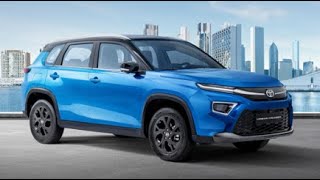 The all-new Toyota Urban Cruiser03 Oct, 2025 .
 -
 The All-New 2024 Toyota Land Cruiser Prado03 Oct, 2025 .
 -
 2016 Toyota Land Cruiser Prices in the UAE04 Dec, 2015 . 84K views
 -
 2016 Toyota Land Cruiser - Ultimate In-Depth Look in 4K04 Dec, 2015 . 7K views